Author Archives: Angelo Gianni

The Dos and Don’ts for Exercising in Your Third Trimester

Pregnancy yoga class. Full length healthy Asian pregnant woman dThis final trimester is when many women feel their extra weight to be unbearable. Gentle exercise is highly important in this stage, especially in reducing edema and correcting postural imbalances caused by the extra weight of the breasts and baby. Edema occurs when the hands, feet, and ankles swell up with excess fluid. You can reduce edema with exercises designed to bring mobility to specific areas and in turn reduce water retention in those areas.

In the third trimester, the digestive system has reduced space and tends to slow down causing constipation and heartburn. Drinking plenty of water and exercising everyday (even just a short walk) will help.

As in the second trimester, you should not be lying on the back during the third trimester. One of the best positions in late pregnancy for both exercising and relaxing is on all fours (either hands and knees or forearms and knees) as it takes the weight of the baby and uterus off the spine. (See exercise below.)

Using specific relaxation and breathing techniques (see exercise below) will allow you to experience a profound rest that is hard to come by in the third trimester.

A big focus in late pregnancy is preparing the pelvic floor muscles for all the stretching, opening, and letting go that they will need to do during labor and delivery. Hopefully in your first two trimesters you were consistently doing your Kegel exercises. Remember that we must work the pelvic floor muscles just like any other muscle in our body finding both the strength and flexibility. Most people tend to focus on just the concentric movement (tightening) while doing the exercises. Try to think of both the lengthening and shortening of the muscles while you work them (see exercise below). These muscles, after all, have the big challenge of totally opening during delivery and contracting back tightly right after. Imagine as you work that your pelvic floor muscles are a trampoline.

Exercise: CAT/CAMEL

This pose is excellent throughout pregnancy but especially in the third trimester and during labor. During labor this pose creates circulation and can be used to turn a baby to its ideal position for birth.

• Start on your mat on all fours. The shoulders are right above the wrists and hips above the knees.
In pregnancy, wrist sensitivity and carpal tunnel syndrome are common because of the release of hormones. If you are experiencing this wrist sensitivity or pain while on all fours here are some suggestions you can try. Roll up your mat a couple of times and place the heel of your hand on the mat with the fingers hanging off. This will lessen the bend of the wrist and may give you some relief. You can also try going onto your knuckles. Some find this a hard balance position, but it takes any pressure off the wrists. You can also try lacing your fingers and bringing your forearms onto the mat.
• Inhale and lengthen the spine.
• Feel the sternum pull away from the tail.
• As you stretch, remember to pull the deep abdominals in to support the lumbar curve.
• Exhale and from the tailbone start to curl and round the spine coming into the scared cat back position.
• Inhale and from the tail start to lengthen the spine.
• Exhale and from the tail start to curl.
• Slowly do 4 to 6 sets and then sit back into Child’s pose to rest.

Exercise: SIDE LYING RELAXATION

Tension is released through this focused relaxation exercise. By quieting the mind and directing attention to specific areas of the body, tension will melt away.

This relaxation exercise is especially helpful during the first stage of labor (when the cervix is opening). Tight areas can be identified and relaxed between contractions. This will save energy for the active second stage of labor (the pushing stage) and birth itself.

• Side-lie on stacked mats and/or blankets so you are comfortable.
• Put your head on a pillow with your bottom arm folded underneath.
• Put a big pillow between the legs. Make sure it supports the inner thighs, ankles, and feet.
• Close your eyes and start to scan the body for tension.
• As you go from the toes to the top of the head take deep breaths. Take a little more time with any areas that feel particularly tight. Send the breath into that tight area, and on the exhale try to melt the tension away.
• As you scan the body, ask each part to relax or to melt away.
• This will give you (especially if you are in the third trimester) a profound sense of rest that is hard to come by.

Exercise: PELVIC FLOOR LIFTING

Imagine your pelvic floor as a Chinese lantern that reaches all sides of the pelvic bowl. So not just from the center but reach and lift from all the side-walls. On every exhale this lantern gets a little taller.

You can try this exercise in a number of positions–on all fours, sitting, side-lying.

• Visualize the bony landmarks at the bottom of the pelvic floor–pubic bone, tail bone, and two sitting bones.
• Visualize the muscles that connect to these four points. This is your pelvic floor lantern.
• On the first two breath cycles focus on just stretching the pelvic floor.
• Inhale and stretch through all four points.
• Exhale and again stretch through all four points.
• Do one more breath cycle, this time thinking about stretching and lengthening the muscles.
• As you do this lengthening also think about the pelvic organs adding their weight and dilating the muscles even more.
• Now add the lifting and contraction of the pelvic floor muscles.
• Inhale and again feel the muscles lengthening.
• Now on your exhale feel the muscle fibers slide together so the lantern shape becomes a bit smaller and starts to lift.
• On your next inhale hold the lift of the pelvic floor.
• On the next exhale try to lift it a bit more.
• Try 2 or 3 more breath cycles, keeping the pelvic floor lifted on every inhale and trying to find a bit more lift on every exhale.
• When you are ready to release the floor, do it on a slow exhale.
• Rest at least 2 or 3 minutes before you do another set.

~ by Jennifer Gianni

What do you think? Comments welcome!

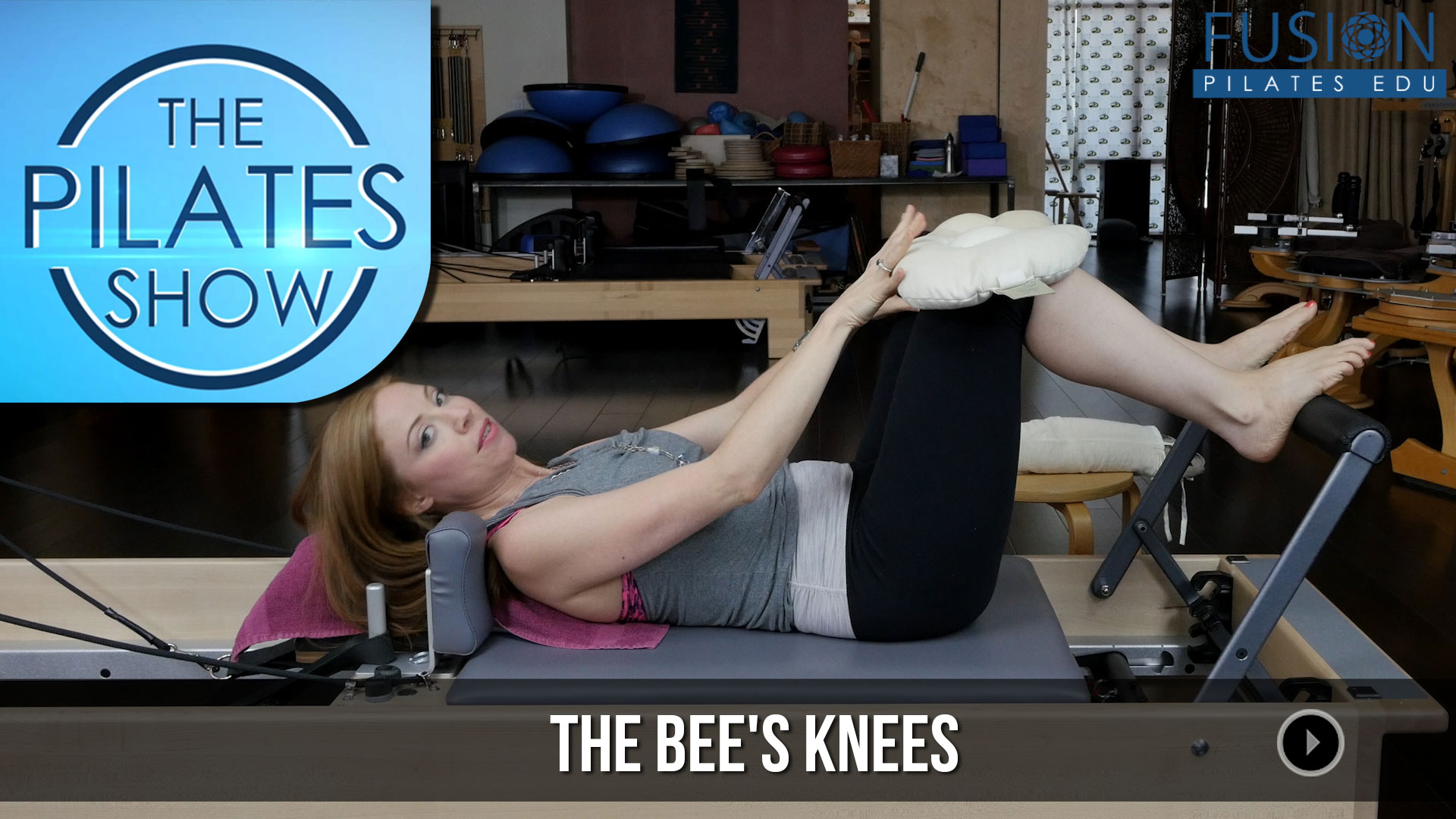
The Pilates Show! – The Bee’s Knees

Click the Alerts icon above for an email reminder when a new episode posts!

In this episode, Casey gets into some knee mechanics!

SHOW NOTES:

You can find more information on SmartSpine™ products here.
Check out Lesley’s Posterior Lateral Hip Workshop here.
You can purchase a green spiky massage ball here.

Have a question you’d like to see addressed? Have a comment? We want to hear from you!

Comment below, on Facebook, Twitter, or at the Forum!

Pulling Straps

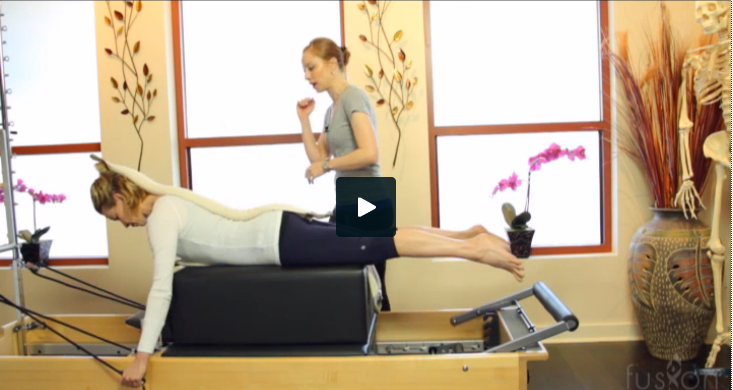
By using the SmartSpine prop made by Marie Jose Blom, you will be able to experiment with exercises in new ways that you never thought possible. These unbelievable spine-shaped bags help to give the clients feedback that tells them where they are in space. That tactile signaling supported by the teacher’s cueing can take an exercise from lackluster to life-changing. In this video you will see a creative way to use this amazing prop to bring a spherical awareness to the whole body in movement.

What do you think? Comment below!

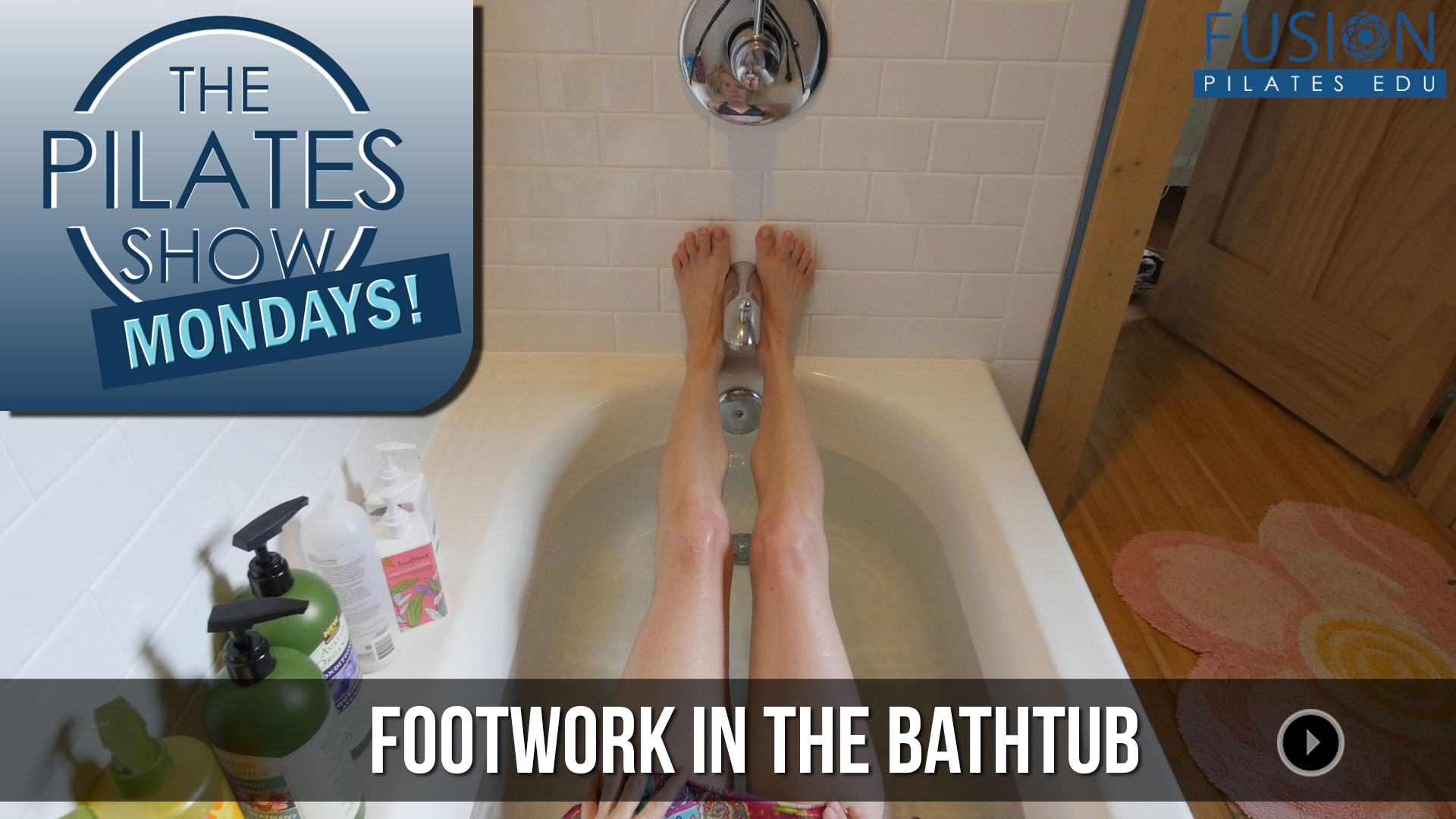
The Pilates Show Mondays! – Footwork in the Bathtub

Click the Alerts icon above for an email reminder when a new episode posts!

In this episode, Jen uses the bathtub for some footwork!

SHOW NOTES:

Find information on Correct Toe spacers here.
Find past episodes on Towel Stretches here and here.

Have a question you’d like to see addressed? Have a comment? We want to hear from you!

Comment below, on Facebook, Twitter, or at the Forum!

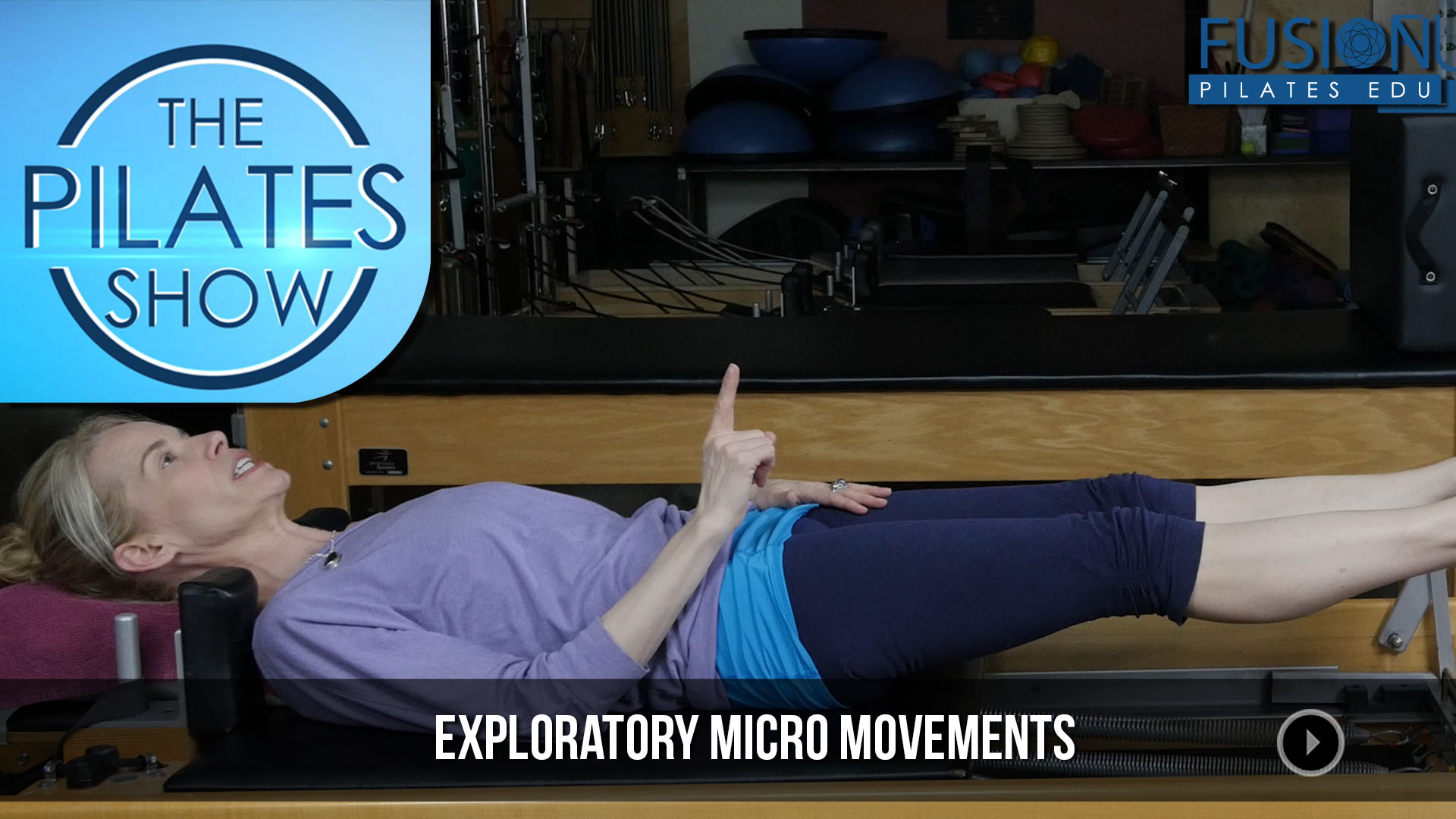
The Pilates Show! – Exploratory Micro Movements

Click the Alerts icon above for an email reminder when a new episode posts!

In this episode, Jen digs into some Fascial Fitness.

SHOW NOTES:

You can find more information on Lesley Powell’s workshops here.
You can find the article mentioned in this episode here.
Find information on Correct Toe spacers here.
Find information on the SmartSpine™ Posture Pillow here.

Have a question you’d like to see addressed? Have a comment? We want to hear from you!

Comment below, on Facebook, Twitter, or at the Forum!

Strengthening the Upper Body with Resistance Band Exercises

UpperBodyIf you are used to using free weights or weight machines, then using resistance bands will feel a bit strange at first. The movement feels different with the resistance bands because of the constant tension you feel throughout. There is no rest time.

You can be very creative with the band exercises. There are a multitude of resistance band exercises that you can perform to strengthen the upper body. Some examples of simple ways to use the bands to work the upper body are to simply loop the resistance band underneath a bench and press up for chest work. Or loop a band around a pole and press out or pull back for back work. For a standing shoulder press, simply step on the band with one foot or both and press up.

Here are some upper body lengtheners and strengtheners that add a bit more complexity than the above.

Exercise: CIRCLE STRETCH WITH THE RESISTANCE BAND

• Stand tall and hold on to each end of the band.
• The tighter the hold the more challenging it will be for flexibility of the shoulder.
• Start with the band in front of the chest and the arms long.
• On this first set, keep the eyes to the horizon.
• Inhale and bring the straight arms to the right and then overhead.
• Exhale and circle the arms to the left and back to the starting position.
• Do 4 reps and then change directions.

ADD ON

• Follow the band with the eyes.
• Inhale and side bend to the right and then arch up to the ceiling.
• Exhale and side bend to the left and then back to the center curling the spine and looking toward the floor.
• Do 4 in each direction.

ADD ON

• Do the whole sequence in a wide plié position. This will increase the balance challenge and strength of the legs.

Exercise: PLIÉ DIAGONAL WITH THE RESISTANCE BAND

• Hold on to each end of the band.
• The tighter the hold, the more challenging.
• Bring the legs into a wide plié position.
• The middle of the knee should be in line with the second toe.
• Hold the plié position as you exhale and stretch the band on a diagonal across the body.
• Inhale and straighten the legs as you bring the band back to its original horizontal position in front of the chest.
• Exhale, plié, and stretch the band toward the opposite diagonal
• While working the arms on the diagonal make sure the torso stays upright and the crown of the head keeps pointing to the ceiling.
• Do 6 to 8 reps on each side.
• To make this a bit easier, keep the legs straight the whole time you work the arms.

Exercise: LUNGING TRICEPS WITH THE RESISTANCE BAND

• You will need a longish resistance band of light to medium tension for this exercise.
• Start standing on one end of your band with the left ball of the foot and heel.
• The band should be under the foot and come up the back of the body.
• When we go into lunge position the back heel will lift so the band will be anchored by the ball of that left foot. Make sure it’s secure!
• Hold onto the other end of the band with one hand to start.
• Bring the right foot forward to come into your lunge.
• The feet should be a bit apart as if they are on railroad tracks and not one foot behind the other.
• Bend the front right knee. Make sure the knee is over the ankle.
• Bring the top end of the band behind the head and hold onto it with both hands.
• Exhale, move into a low lunge, and stretch the band as you lengthen the arms.
• As you straighten the arms make sure the eyes stay at the horizon and the front ribs stay soft and are not popping forward.
• Inhale.
• Come up from the lunge and bend the elbows so the tension is released in the band.
• Do 6-8 on each side.

Exercise: DRAW A SWORD WITH THE RESISTANCE BAND

• Standing up with the band in front of you, step on one end of the band with the left foot.
• Hold the other end of the band in the right hand.
• Start with the first move of Draw a Sword called The Belly Rub
• Inhale and bending at the elbow bring the band and hand across the body.
• Exhale and slowly release the band straightening the arm to the beginning position.
• Do 4-6 reps on each side.

Adding on the Full Draw a Sword

• Inhale, bend the elbow, and then straighten the arm so the band is stretched across the whole front of your body.
• Make sure that the shoulders and pelvis have stayed squared to the front as you draw your sword.
• Make sure that the wrist has stayed in line with the forearm and that there is no bend in the wrist.
• Exhale, lead with the knuckles, bend the elbow, and slowly bring the arm back across the body as you find your starting position.
• Do 4-6 reps on each side.

Exercise: DRAW A SWORD KARATE KICK WITH THE RESISTANCE BAND

• Standing up with the band in front of you, step on one end of the band with the left foot.
• Hold the other end of the band in the right hand.
• Inhale, bend the elbow, and then straighten the arm so the band is stretched across the whole front of your body.
• At the same time the arm is moving, lean slightly toward the left and kick the right leg out to the side.
• Exhale and bring the arm back across as the leg comes back down into the starting position.
• Do 4-6 on each side.

Add On

• For a very advanced challenge stay balanced on one leg as you bend and straighten the arm and opposite leg 4 to 6 times.

Thoughts? Comment below!


~ by Jennifer Gianni

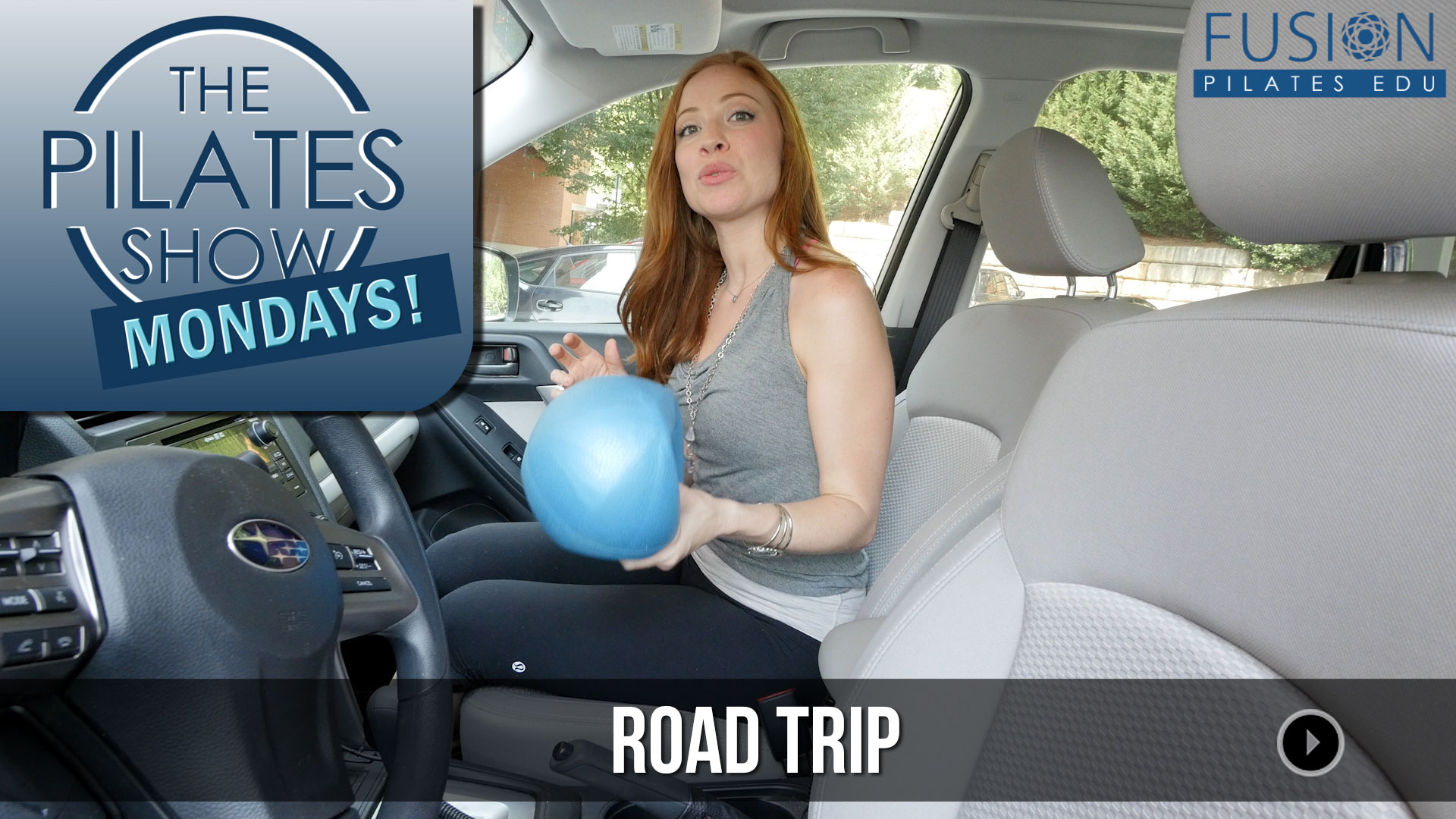
The Pilates Show Mondays! – Road Trip

Click the Alerts icon above for an email reminder when a new episode posts!

In this episode, Casey takes her Overball on the road.

SHOW NOTES:

Find information on the overball used in this video here.

Have a question you’d like to see addressed? Have a comment? We want to hear from you!

Comment below, on Facebook, Twitter, or at the Forum!

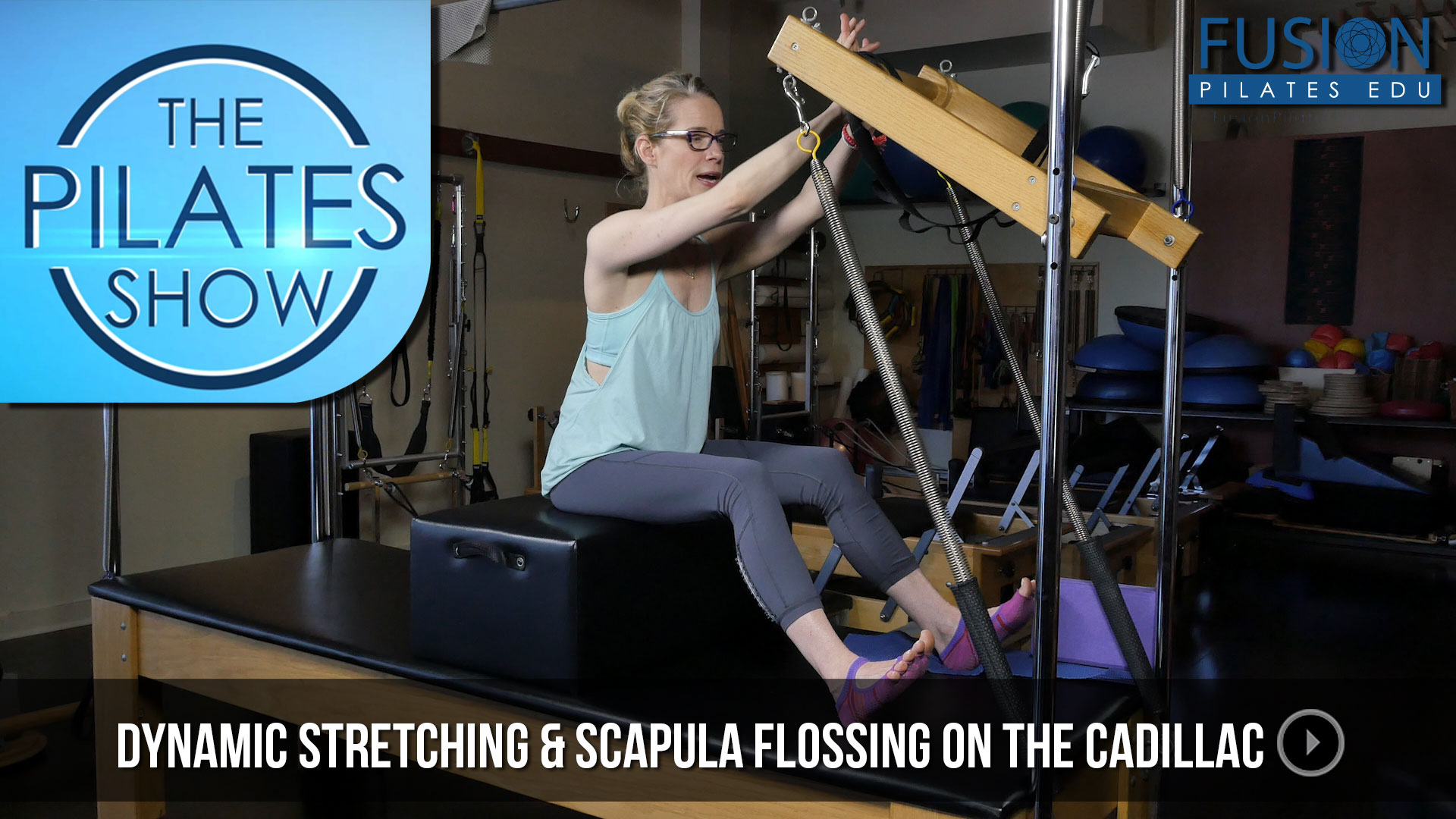
The Pilates Show! – Dynamic Stretching & Scapula Flossing on the Cadillac

Click the Alerts icon above for an email reminder when a new episode posts!

In this episode, Jen flosses her Scapula on a Cadillac.

SHOW NOTES:

Add your own thoughts on Margherita_637’s questions here.

Have a question you’d like to see addressed? Have a comment? We want to hear from you!

Comment below, on Facebook, Twitter, or at the Forum!

Correct Calf Raises on the Chair

The skills needed to perform calf raises correctly are many. And this work is not just for ballerinas either. Almost every client that you will see will actually walk into your door. This means that they need as much range in the ankle as possible as well as as much mobility as possible through the first ray of the foot. By using the chair, your clients will not only be able to work their end range in their point, but also be able to work and open up their Achilles tendons at the same time. This creates a beautiful balance in the lower leg that carries on up the kinetic chain.
Join us again soon!

The Pilates Show Mondays! – Toe Spacers

Click the Alerts icon above for an email reminder when a new episode posts!

In this episode, Casey asks her toes for a little space!

If you’d like the toe spacers featured in this video for yourself, please visit this LINK.

If you’re interested in carrying the toe spacers featured in this video at your studio – please open a Support Ticket and we’ll give you the info!

Have a question you’d like to see addressed? Have a comment? We want to hear from you!

Comment below, on Facebook, Twitter, or at the Forum!

The Pilates Show! – Monkey See, Monkey Chew

Click the Alerts icon above for an email reminder when a new episode posts!

In this episode, Casey chews over some release work.

SHOW NOTES:

Add your own thoughts on Jaclyn’s question here.
Check out Philip Beach’s Archetypal Movements & the Erectorcises workshop here.
You can order the green spikey balls used in this episode here.
Get more info on the pelvis and hip area withLeslie Powell’s workshop on the Lateral Hip here.
Get more info on finding ease and mobility in the body with Casey’s Practical Release workshops here.

Have a question you’d like to see addressed? Have a comment? We want to hear from you!

Comment below, on Facebook, Twitter, or at the Forum!

Map of the Abdominals

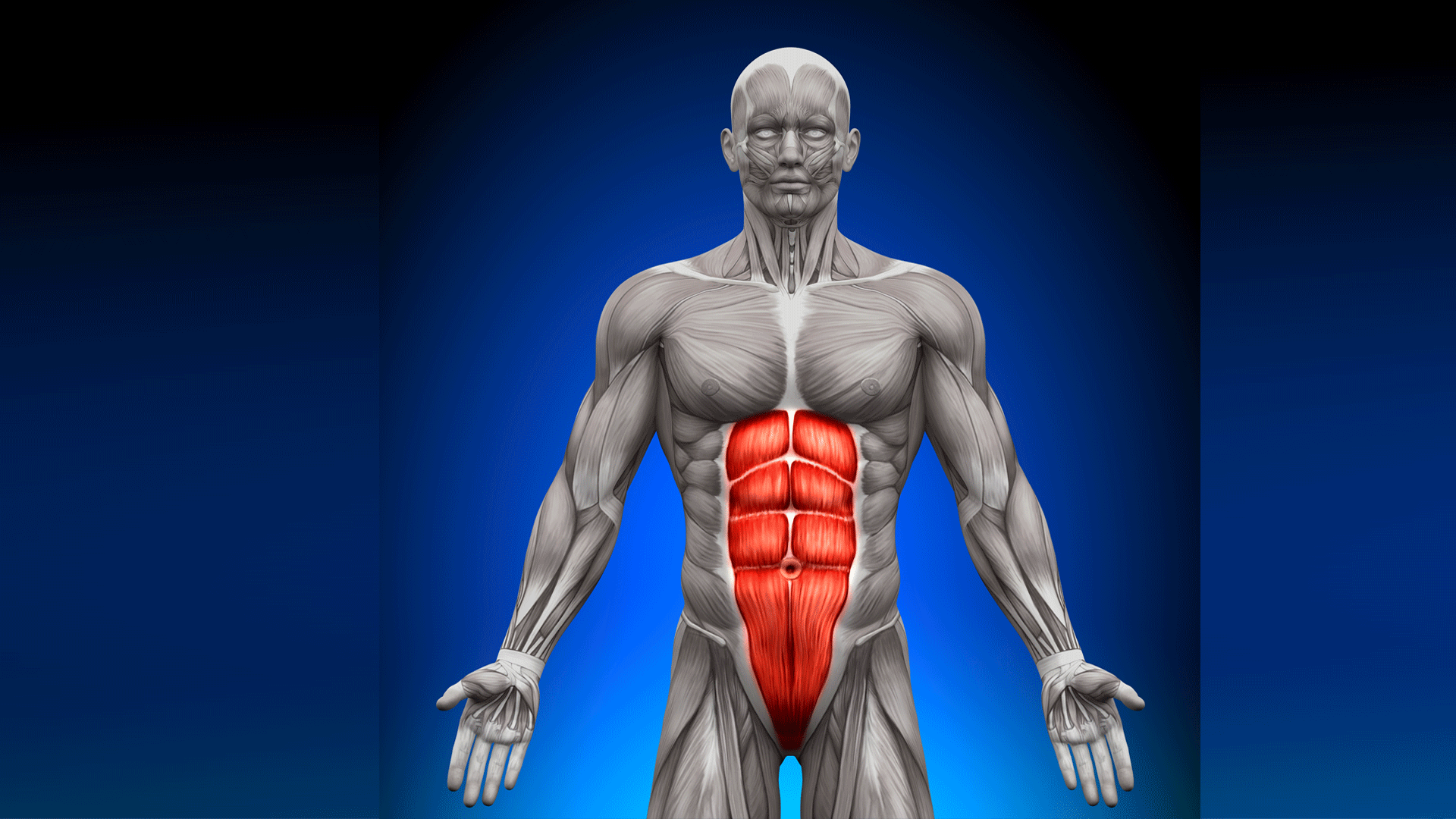
AbdominalsToday, I’d like to give an introduction to another area of concentration, the abdominals. Your deepest layer of abdominals (the muscles closest to the skeleton) are the transverse abdominals. This set of abdominals acts as a corset that wraps all the way around the torso. The transverse muscle blends into the lumbodorsal fascia which attaches into the lumbar spine. When the transverse muscle contracts, it pulls to the sides and stretches across the front of the pelvis because the fascial connections around the lumbar spine contract, essentially acting as a corset and decreasing the diameter of the waist.

The transverse not only flattens the belly but helps to protect and strengthen the lower back. The transverse is one of the core muscles that we always hear about when talking about Pilates. A core muscle acts to stabilize and align the skeleton. With a certain amount of discipline, the core muscles can be trained to fire at all times. So when we are ready to go into the bigger movements such as jumping, squatting, and running, the skeleton is stabilized and protected.

Abdominal strength starts with the core, but the core does not move the torso. To create movement, the remaining abdominals must be engaged. These muscles are the rectus abdominis, internal oblique abdominals, and the external oblique abdominals.

The rectus abdominals are the muscles we refer to as the six pack muscles. They are split into left and right halves and run vertically down the front of the torso. They attach into the transverse abdominals near the pubic bone. This set of muscles are surface muscles (not core) and help us to create movement – primarily flexion in the torso. In many circumstances, people concentrate on training the rectus muscles without the support of the transverse abdominals, which does not create the effect we’re all working toward. The abdominals will never flatten and often, a split of two fingers or more will be created between the halves of the rectus, called a diastisis. This splitting is also very prevalent in pregnant or postpartum women. When a diastisis occurs, intestines will often bulge out of the gap of and put the lower back in jeopardy. The only way to close the gap is through strengthening the transverse without stressing the rectus or with surgery.

The other two sets of abdominal muscles are the internal and external obliques. The perception is that working these muscles will give us a small waist, but this is not the case. If we work the rectus and obliques without working or firing the transverse, we will end up with a boxy, distended look. The key to achieving an hourglass figure (small waist line) is through our corset muscle – the transverse abdominals. The obliques definitely help to enhance the work if the transverse is engaged as well. We have two sets of obliques. The internal obliques, also referred to as same side rotators, lie just above the transverse abs and under the external obliques. We contract these muscles to rotate and to perform side bends of the trunk to the same side. The external obliques act as opposite side rotators. For example, when we rotate to the left, our internal abs on the left and external abs on the right are contracting.

At this point, I would also like to review the neutral spine and pelvic position. According to current research in biomechanics, the core or inner-unit works best as a spinal stabilizer when the pelvis is in a neutral position. Understanding the neutral spine and pelvis is absolutely essential to effectively work the abdominals.

The placement of the pelvis is considered to be neutral when the anterior superior iliac spines (front hip bone) and the pubic bone are in a plane perpendicular to the ground in standing or sitting and parallel to the ground when supine. In our ab work, we will be coming into and out of the neutral spine and pelvis position. It is easiest to find a neutral spine/pelvis by standing against the wall or lying on your back. You must be aware of the following three anchors:
• The backside of the sacrum (S-2) and pelvis
• The backside of the solar plexus (T-8)
• The base of the head (occipital base)

If your upper and/or lower back is too arched or too rounded to get you into the proper neutral position, you may need to pillow the head forward to find the proper head alignment, mid-back connection, and placement of the pelvis.

Follow these tips to help you find your neutral spine and pelvis. Again, this is essential as a base for working our abdominals.

• Lie on your back with the knees bent and the feet on the mat spread hip distance apart.
• Keep the middle of the back of the head and the mid-back (bra line) anchored to the floor.
• Bring the heels of the hands (the bottom of the palm close to the wrist) to the hip bones on the front of the pelvis and the fingertips on the pubic bone.

The spine and pelvis are neutral if you have your upper anchors (middle of the back of the head and mid-back) and the heels of the hands and fingers are on the same plane. If the fingers are above the heels of the hands, then the pelvis is in a posterior tilt with the tailbone reaching toward the ceiling. If the fingers are below the heels of the hands, then the pelvis is in an anterior tilt with the tailbone reaching to the mat and the ribcage popping to the ceiling.

Both of these two scenarios are extreme positions of the pelvis. You are looking for the middle ground between these two extremes.

Hope you enjoyed the article. Give me some feedback below!

~ by Jennifer Gianni

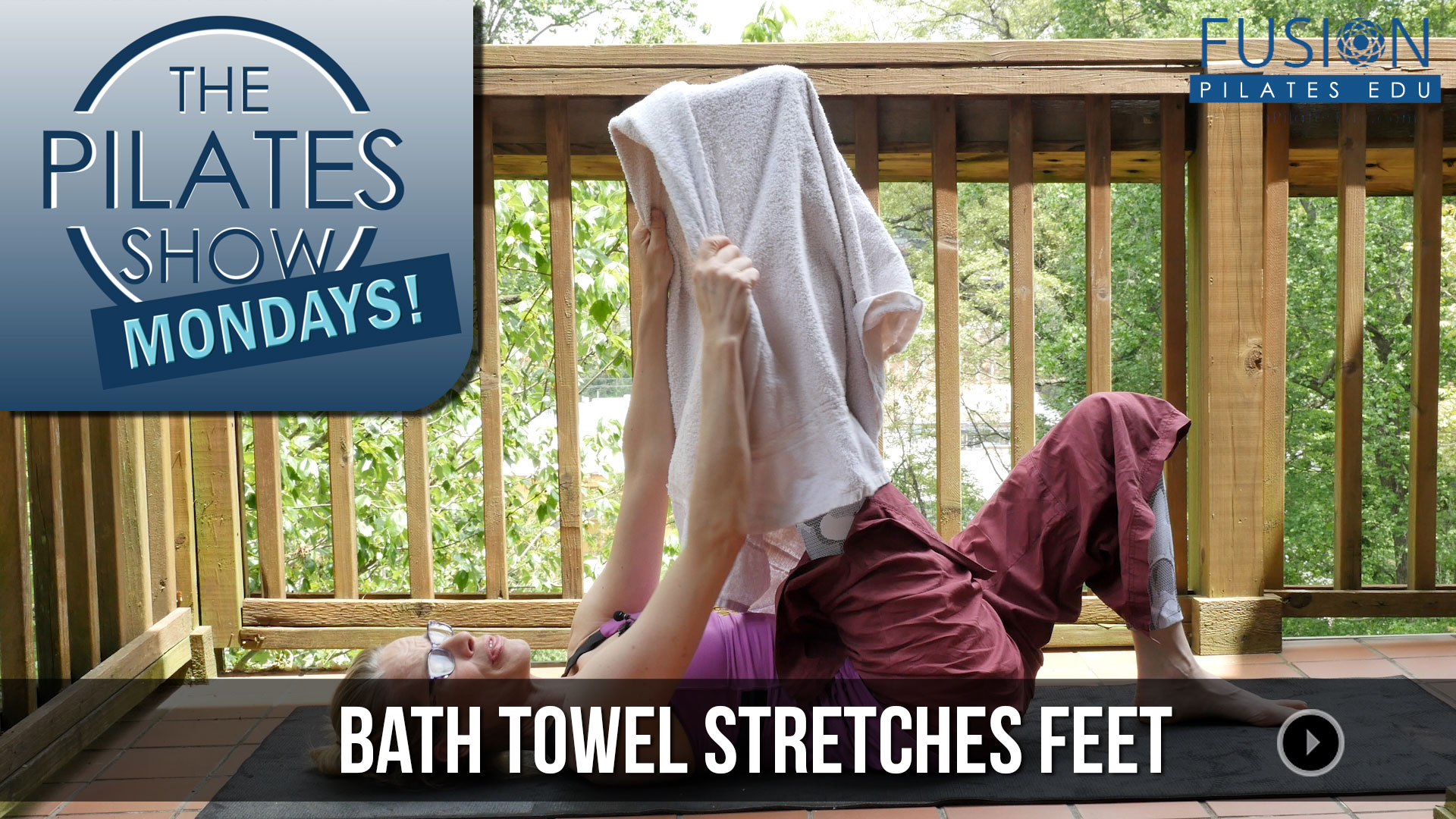
The Pilates Show Mondays! – Bath Towel Stretches 2 – The Feet

Click the Alerts icon above for an email reminder when a new episode posts!

In this episode, Jen uses a towel to get her feet happening!

Have a question you’d like to see addressed? Have a comment? We want to hear from you!

Comment below, on Facebook, Twitter, or at the Forum!

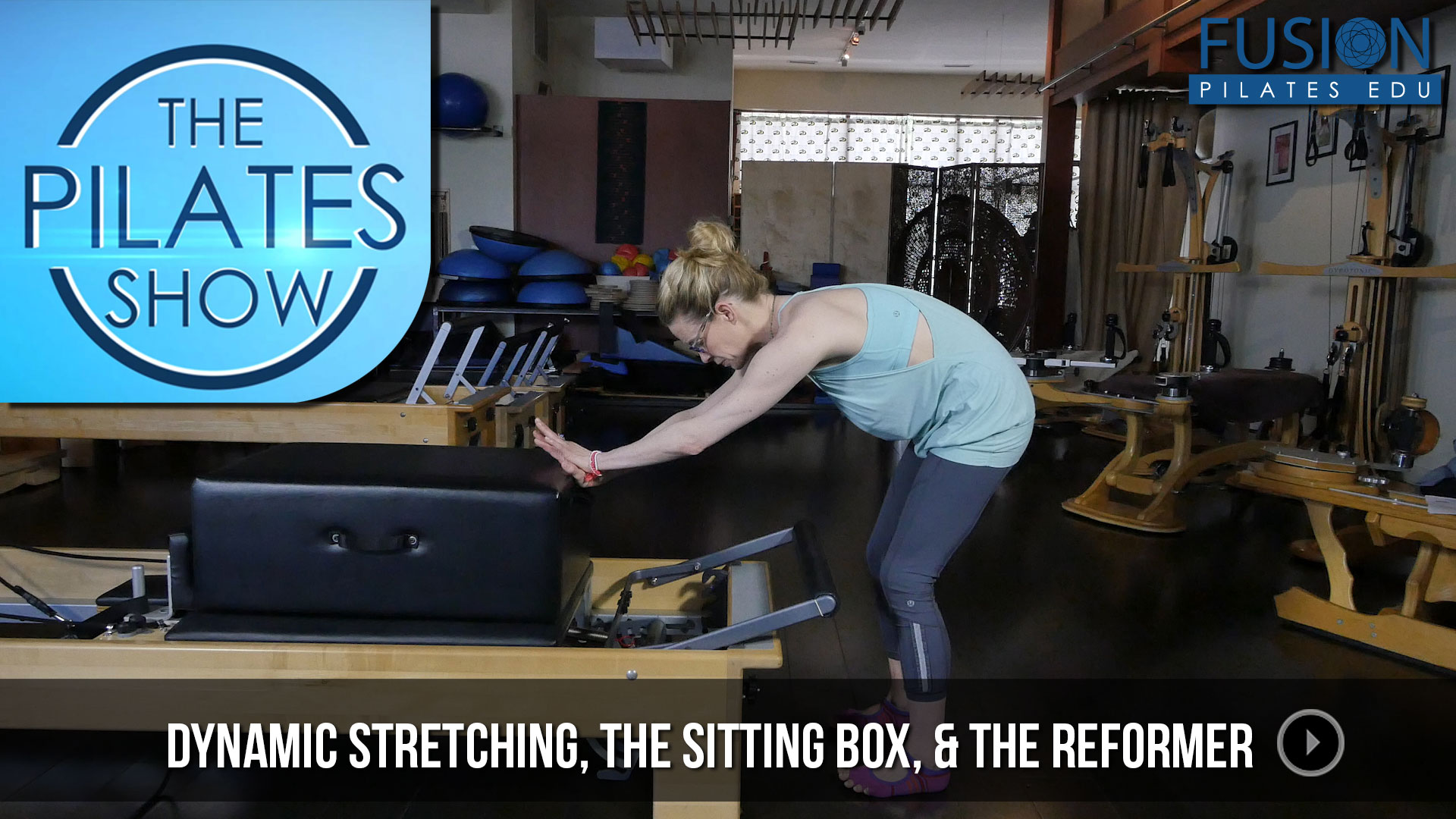
The Pilates Show! – Dynamic Stretching, the Sitting Box, & the Reformer

Click the Alerts icon above for an email reminder when a new episode posts!

In this episode, Jen compares the Fascial way with the Pilates way.

SHOW NOTES:

You can comment on Alesia’s question here and here.

Have a question you’d like to see addressed? Have a comment? We want to hear from you!

Comment below, on Facebook, Twitter, or at the Forum!

How to Care for the Cadillac

The Cadillac is such an amazing, versatile piece of equipment. And with that comes many bells and whistles to attend to when caring for it. Like we have said before, caring for your studio environment is an essential part of belonging to a studio team. The safety of your client needs to be of the utmost concern, and with the Cadillac’s many moving parts it can become dangerous in unskilled hands. Watch this video to learn more about how to keep your Cadillac running smoothly and safely.
Hope you enjoyed the video – let us know below!

The Pilates Show! – Hip Wellness

Click the Alerts icon above for an email reminder when a new episode posts!

In this episode, Casey hips us to some innovative reformer work.

SHOW NOTES:

You can comment on Elizabeth G’s question here:
Check out great workshops related to Hip Wellness here and here.
Get info on the Franklin Method here.
Get info on the Course Prep program Elizabeth G mentioned here.


Have a question you’d like to see addressed? Have a comment? We want to hear from you!

Comment below, on Facebook, Twitter, or at the Forum!

The Semicircle: Guest Post with Trina Altman

Trina AltmanWhy the Semicircle Deserves a Class of its Own

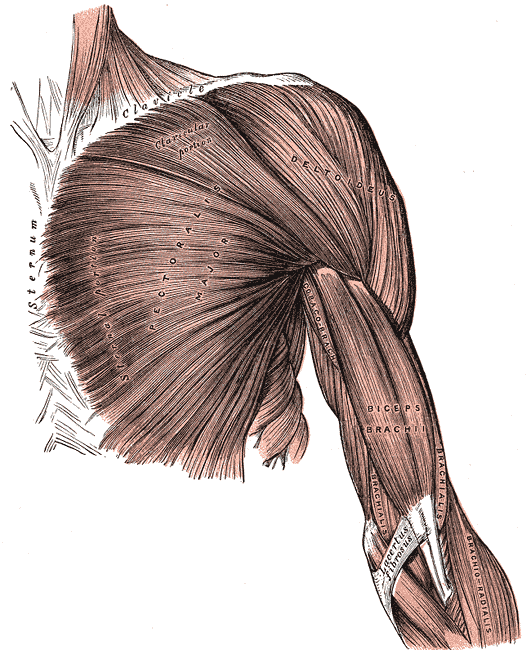
Pec Major PhotoThe semicircle on the reformer is my favorite Pilates exercise. I love the way it feels to wind my way through space while undulating my spine with arms overhead. The feedback from the reformer shoulder rests, carriage, and footbar support me just right, so I can worm my way through space—in a more refined (and much safer) form than I did in the early 80’s when I was a break-dancing fool.

Teaching this exercise, on the other hand, is not always so lovely—especially in a multilevel reformer class where students struggle with complex choreography. But there are hidden gems to be found inside the semicircle on the reformer, and many good reasons to break it down from time to time. By teaching the component pieces of the semicircle exercise, students begin to understand and fully embody the details of spinal articulation, correct shoulder positioning, and undulating their spine all while balancing on the balls of their feet.

Deconstructing the semicircle opens a path to its mysteries and pleasures. For example, I teach the details of spinal articulation using an exercise I call The Wave. To understand how The Wave preps your spine for the semicircle, watch the video below. You’ll see and feel what I mean and, as a result, get so much more out of your next semicircle session.

For info on the SmartSpine™ Arch Tubbies used in this video go HERE.

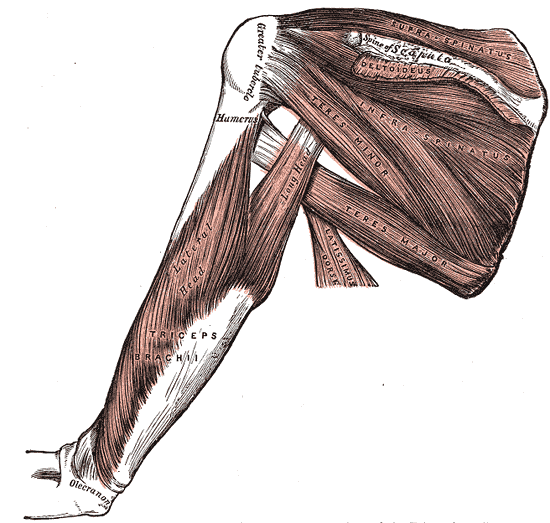
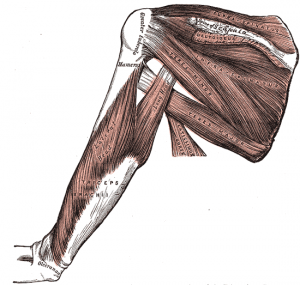
Infraspinatus and Teres Minor PhotoThen, of course, there’s the loaded 180-degree range of motion in shoulder flexion and external rotation required for the semicircle… which is no easy task! That’s why I introduce the exercise I call Elbows Forward-Hands Back. It allows the student to practice strengthening the external rotator cuff muscles while simultaneously stretching pec major and friends. Watch the next video below to see what I mean.



I include plenty of other exercises in my workshop Pilates Deconstructed™: Toolbox for Your Reformer Classes on Saturday, August 29th, from 10am-6pm at Fusion Pilates in Asheville, NC. Why not come and enjoy this full 8-hour day? Experience three one-hour reformer classes, each of which will deconstruct a classic Pilates exercise and inspire you to find creative solutions for common teaching problems. You and your students will all benefit. This continuing education workshop will be a joint-by-joint adventure that challenges you to map your body from the inside out!

Register here:

http://fusionteachertraining.com/eventsworkshops/altman/

Trina Altman, E-RYT, is a STOTT PILATES® certified instructor, Roll Model™ teacher trainer and Integrated Yoga Tune Up® teacher trainer. Trina is the creator of Pilates Deconstructed™, an innovative interdisciplinary approach that fosters an embodied understanding of Pilates and its relationship to modern movement science. Emphasizing the importance of inner focus, she teaches anatomy for yoga teacher trainings across the country. She also leads teacher trainings at Equinox fitness clubs worldwide for the myofascial release format Rx Series and is a regular presenter at fitness and yoga conferences. Her teaching fosters body cognition and self-discovery, firmly grounded in anatomical awareness. Trina works out of Los Angeles at Equinox and The Moving Joint. Find her at www.trinaaltman.com.

Pilates Deconstructed™: Toolbox for Your Reformer Classes

Description:

Master teachers know that conveying concepts—not just repertoire—in a group reformer class is what truly sets them apart from novice instructors. Concepts keep clients coming back for more. In this workshop, you’ll learn how to sequence reformer classes by teaching preparatory movement skills that are a microcosm of more complicated exercises.

Think of it like this: Master chefs don’t start out preparing seven-course meals. They begin with ingredients, proportions, and how to combine them into a single dish. When you teach your students the necessary elements at an appropriate pace, you give them what’s needed to master new and more complicated exercises.

Saturday, August 29, 2015 in Asheville, NC

DETAILS & REGISTRATION

7 Practical Steps to Improve Your Online Pilates Presence

7 Practical Steps to Improve Your Online Pilates Presence

Guest Post by Anastasiya Goers

anastasiya-goersDo you know one thing that people love more than doing Pilates with you?
OK, there might be a few answers but spending time online would be at the top of the list.

Most of the US population spends over 7 hours every day online.

We are used to watching how-to videos, keeping up with Facebook and Twitter updates, reading news, watching Pilates videos and awesome workshops (thank you, Jen and Casey for those ;-)), finding local businesses and just killing time (who hasn’t been guilty of that?). The truth of the matter is that online world is the best place to get connected with new clients.

But a lot of Pilates teachers and studio owners really miss out on the opportunity to harness the power of the WEB to connect with more clients. Merely having a website or a Facebook page is not enough to bring more people to your Pilates door.

Let me share with you 7 simple steps that will take your online presence from “barely there” to “awesome.”

  1. Start with a website. Having a website for your Pilates services is as essential as breathing in Pilates.

Even as an instructor working at a studio you will benefit from having your own website. If you consider pursuing Pilates as your main occupation then you need a place online to present your services:

  • Show classes that you teach at different locations,
  • connect with new clients by writing blog posts,
  • show your credentials or
  • advertise your At-Home services.

Having a self-hosted professionally-designed website is always the best way to secure the future of your business. Studios where you teach might change, classes that you offer might change, your geographical location might change but your website will remain with you no matter what.
I would strongly advise against the use of any website builders (Weebly, Wix, Squarespace etc.) because most of them limit the amount of customizations that you can do and are not search-engine-friendly (plainly said, those website will never pop up on the first pages of search engines like Google, Yahoo or Bing.)

  1. Decorate your space wisely. The layout of your website should translate the same emotions as your physical space. Dull and amateur-looking websites send the same message to your potential clients: your teaching style and studio are boring.
    1. Use professional-quality images of your space and yourself on your website,
    2. use images of attractive people to demonstrate the results that your clients can get at your studio,
    3. keep the layout clean with as few banners as possible,
    4. use as much text as needed (long dull articles only bore the viewers, really short paragraphs don’t give enough information),
    5. make your call-to-action take the above-the-fold spot on your website (your new client promotion, newsletter sign-up, location and contact details.
  1. Easy mobile access. In January of 2014 CNN Money reported that consumers spend over 60% of their Internet time on mobile devices. As of April 21st 2015 Google uses “mobile-friendliness” as one of the major ranking factors. You can check whether your website is mobile-friendly or not here. Talk to your developer about creating a mobile-friendly website and test the finished product on as many devices as possible.
  2. Harness the power of Google. If you have a business location for your Pilates services then you can use Google Local to put your studio on Google maps – it’s free. Click here to add your business to Google

Make sure to add contact details, business description and photos to your Google listing. Once you have set everything up, ask your clients to review your business. Most people trust online reviews as much as their real friends.

  1. Let your clients praise you. Testimonials are the most powerful part of your website or business listing if they are done right. Ask your current clients to share
    1. why they came to your studio,
    2. what goals you helped them reach,
    3. what they have gained from working with you,
    4. why they would recommend you to their friends.

If possible, try to do video interviews for your website or ask your clients for the permission to use their pictures with their warm words. Seeing faces of your clients will give your visitors a sense that they are talking to a real person about your services. It is a major trust and conversion factor.

  1. Ready. Set. Shoot! Did you ever dream about becoming the next Pilates video star? Or do you get nervous chills at the very thought of putting a video of yourself online? You don’t have to be an Oscar-nominee or have a complete video studio at your disposal to embrace the power of video marketing.

Videos are an excellent way to communicate with your potential clients and to improve your teaching skills. A smartphone camera and good lighting is all you need to record a short video for Youtube.

By the way, did you know that people spend more than a third of their time online watching videos? Let them join you for a quick Pilates class during their lunch break or unwind with Pilates release work after a long day instead of watching Funny Cat videos.

Shoot your video, do some light editing,  upload it to your Youtube account and add a detailed title and description. How easy was that?

  1. Share your Pilates voice. Do you wish that you had more time to share Pilates or holistic tips with your clients? You can do that on the pages of a blog or through a newsletter.
  • Sharing your observations and advice will let potential clients learn more about who you are and your style of teaching.
  • Excellent content will be shared on social media raising awareness about your services among your clients’ friends.
  • You will be a better teacher by learning to communicate your skills not only verbally but also in a written form.

A website is a powerful tool in your marketing toolbox that requires little maintenance once it is done. Use it wisely to create a constant flow of clients who are excited to experience the amazing Pilates transformation.


Bio: Anastasiya Goers is following her passion for Pilates by running a community-based Pilates website – PilatesBridge.com (http://www.pilatesbridge.com ) that unites Pilates professionals and Pilates students.She also helps Pilates business owners create authoritative web presence, design/redesign their websites with the new goals in mind as well as come up with creative ways to connect with new clients. Click here (http://signup.pilatesbridge.com/) to get her free training 7 (Practical) Steps to Get New Pilates Clients from the Web


The Pilates Show Mondays! – Bath Towel Stretches

Click the Alerts icon above for an email reminder when a new episode posts!

In this episode, Jen talks about taking your stretches wherever you go!

Have a question you’d like to see addressed? Have a comment? We want to hear from you!

Comment below, on Facebook, Twitter, or at the Forum!

The Pilates Show! – Dynamic stretching , The Reformer & The Elephant

Click the Alerts icon above for an email reminder when a new episode posts!

In this episode, Jen revisits the 3rd fascial fitness principle. 

SHOW NOTES:

View the previous episode on Cat Stretch here.
Add your thoughts on Jodie’s question here.
Find info on our Release Workshops here.
Find info on Tom McCooks online workshops here.

Have a question you’d like to see addressed? Have a comment? We want to hear from you!

Comment below, on Facebook, Twitter, or at the Forum!

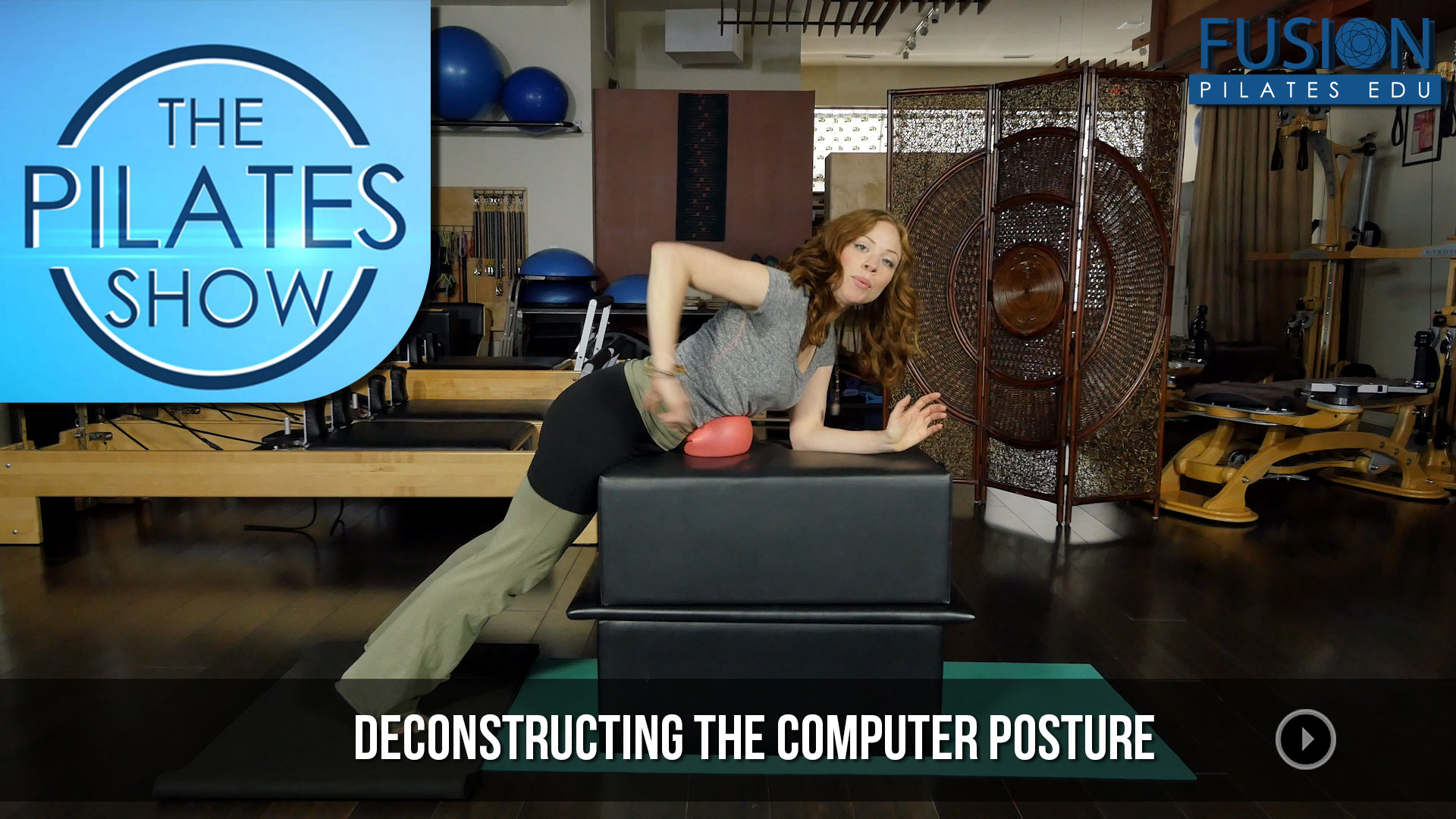
The Pilates Show! – Deconstructing The Computer Posture

Click the Alerts icon above for an email reminder when a new episode posts!

In this episode, Casey talks about the bane of our posture existence….


SHOW NOTES:

Find info on the props used in this episode here.
(We get the large balls at the pet store!)
Find info on the Online Refresher Course here.

Have a question you’d like to see addressed? Have a comment? We want to hear from you!

Comment below, on Facebook, Twitter, or at the Forum!

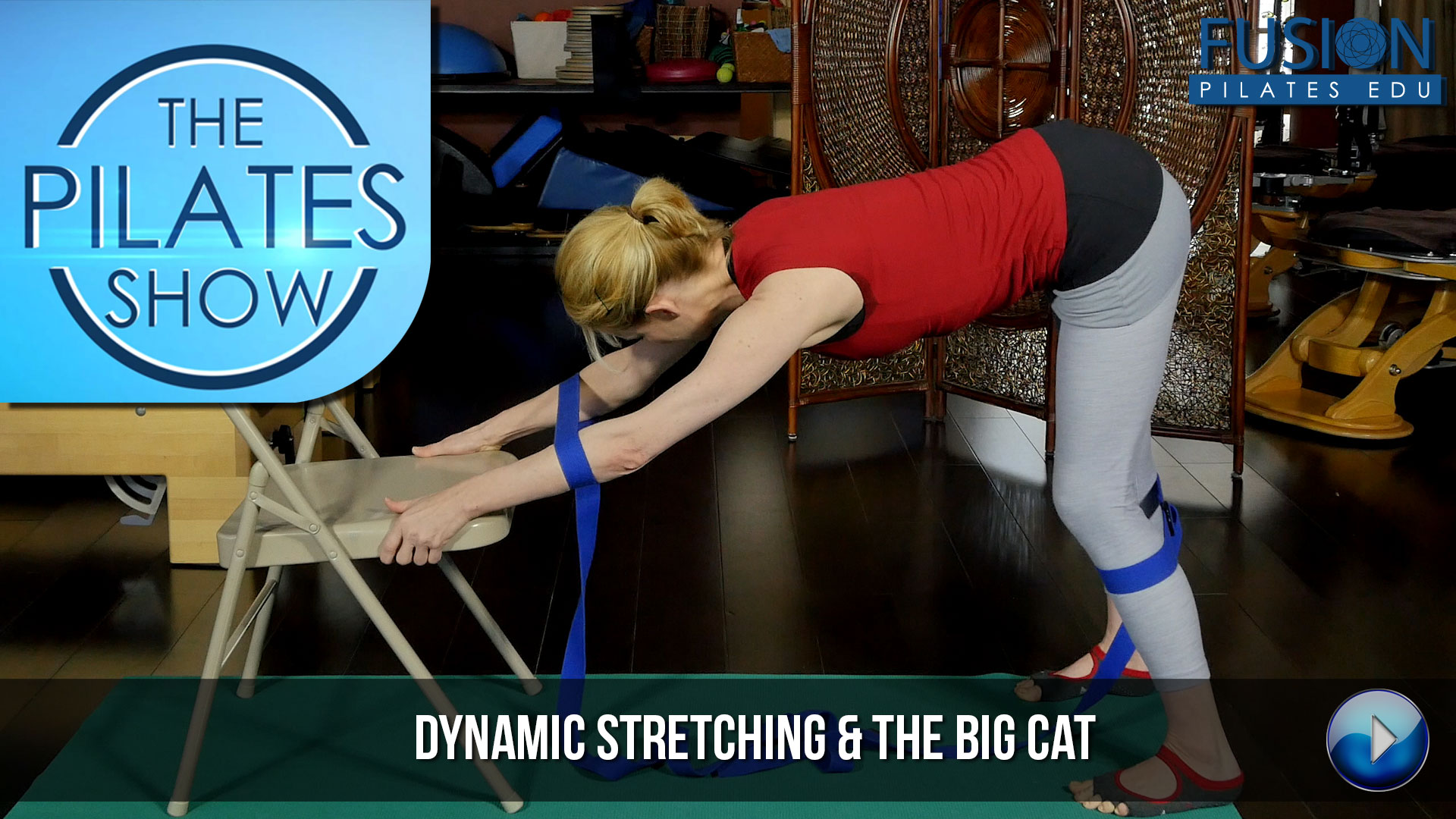
The Pilates Show! – Dynamic Stretching & the Big Cat Stretch

Click the Alerts icon above for an email reminder when a new episode posts!

In this episode, Jen gets into some 3rd fascial fitness principles.


SHOW NOTES:

Check out Jen’s Whole System Fix workshop here.
Have a question you’d like to see addressed? Have a comment? We want to hear from you!

Comment below, on Facebook, Twitter, or at the Forum!

The Pilates Show Mondays! – Empty the Mental Trash

Click the Alerts icon above for an email reminder when a new episode posts!

In this episode, Casey gives some pointers on getting rid of your mind trash at the end of the day…

Have a question you’d like to see addressed? Have a comment? We want to hear from you!

Comment below, on Facebook, Twitter, or at the Forum!

The Pilates Show! – The Eyes Have It

Click the Alerts icon above for an email reminder when a new episode posts!

In this episode, Casey passes on some creative ideas for helping your clients with neurological disorders.

SHOW NOTES:

Learn more about Elizabeth Larkam’s workshops here.
Learn more about Anne Mettee here.
Find lots of free Release Workshops here.
For information on our online Release Workshops, click here.
For information on the SmartSpine™ products click here.
Find info on Casey’s Practical Release workshops here.

Have a question you’d like to see addressed? Have a comment? We want to hear from you!

Comment below, on Facebook, Twitter, or at the Forum!

Tunnel Vision: Guest Post with Trina Altman

TTrina Altmanunnel Vision

There’s so much more going on than what’s in front of your eyes

There’s so much more going on than what’s in front of your eyes
We bipedal humans are oriented to the sagittal plane, focused on what’s in front of us. Our eyes are forward-facing lenses through which we orient ourselves and navigate the world. But what are we missing?

Being tech savvy takes a toll on the body. With all the time we spend staring at screens, our peripheral vision skills are severely underdeveloped. And plenty of exercise programs, like treadmills, stationary bikes, and ellipticals, keep our eyes glued forward while our bodies aren’t moving anywhere at all. Unfortunately this all adds up to a lack of proprioceptive skills. Difficulty in applying motor control and coordination in spatial navigation—that is, knowing where to move a body part without looking at it—can make it tough to teach frontal/coronal plane reformer exercises in a group setting.

I absolutely love the side-over on the reformer. Except when I hate it. On the one hand, I love the feeling of shooting through the air like a torpedo with only my outer ankle pressed against a thin strip of fabric. On the other hand, I hate feeling like no matter how hard I try, if there isn’t a mirror, I can’t tell if I have rotated, extended, or flexed my spine instead of easily gliding through lateral flexion and extension with a neutral spine. That’s a proprioception problem. This conundrum sparked me to design a workshop that would prepare me and my students to practice the side-over without always feeling unsure of our place in space. One of the many exercises I teach in my Pilates Deconstructed™ Side-Over Workshop is called the “Buoyant Boomerang.” It is a wonderfully relaxing, dynamic side stretch that I learned from my friend and colleague Louis Jackson. I love it because it mimics the movement of the side-over while providing feedback from your hands to your feet and the ground beneath. Watch the video below and give this “sliding side-over” a try.

If you want to learn more fun creative preparatory exercises that will help you and your students to navigate the side over with grace and style, join me at Fusion Pilates in Asheville, NC, on Saturday, August 29th. Sign up here: fusionteachertraining.com

Trina Altman, E-RYT, is a STOTT PILATES® certified instructor, Roll Model™ teacher trainer and Integrated Yoga Tune Up® teacher trainer.  Trina is the creator of Pilates Deconstructed™, an innovative interdisciplinary approach that fosters an embodied understanding of Pilates and its relationship to modern movement science. Emphasizing the importance of inner focus, she teaches anatomy for yoga teacher trainings across the country. She also leads teacher trainings at Equinox fitness clubs worldwide for the myofascial release format Rx Series and is a regular presenter at fitness and yoga conferences. Her teaching fosters body cognition and self-discovery, firmly grounded in anatomical awareness. Trina works out of Los Angeles at Equinox and The Moving Joint. Find her at trinaaltman.com.


Pilates Deconstructed™: Toolbox for Your Reformer Classes

Description:

Master teachers know that conveying concepts—not just repertoire—in a group reformer class is what truly sets them apart from novice instructors. Concepts keep clients coming back for more. In this workshop, you’ll learn how to sequence reformer classes by teaching preparatory movement skills that are a microcosm of more complicated exercises.

Think of it like this: Master chefs don’t start out preparing seven-course meals. They begin with ingredients, proportions, and how to combine them into a single dish. When you teach your students the necessary elements at an appropriate pace, you give them what’s needed to master new and more complicated exercises.

Saturday, August 29, 2015 in Asheville, NC

DETAILS & REGISTRATION

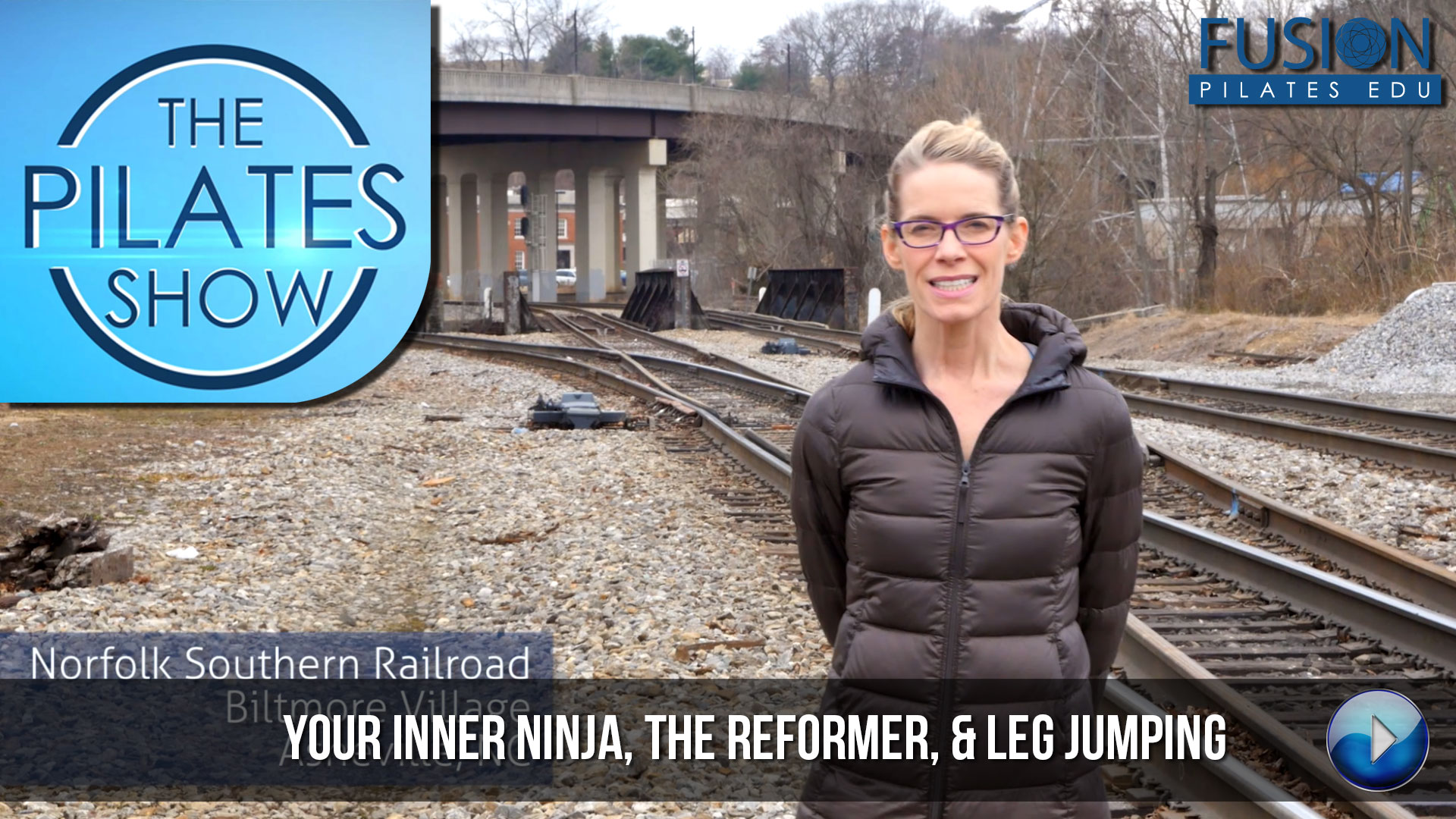
The Pilates Show! – Your Inner Ninja, the Reformer, & Leg Jumping

Click the Alerts icon above for an email reminder when a new episode posts!

In this episode, Jen creeps up again Ninja style to throw some Reformer & Leg Jumping in your general direction…

SHOW NOTES:

Check out the episode on your Inner Ninja, the Reformer and Arm Jumping HERE
Check out the Stair Climbing episode HERE.
Find info on the Refresher Program HERE.
Find info on the Apprentice Program HERE.
Share your thoughts on Theresa’s question HERE.

Have a question you’d like to see addressed? Have a comment? We want to hear from you!

Comment below, on Facebook, Twitter, or at the Forum!

The Pilates Show EXTRA! – Happy Pilates Day!

PHNjcmlwdCB0eXBlPSJ0ZXh0L2phdmFzY3JpcHQiIHNyYz0iaHR0cDovL2Z1c2lvbmZpdG5lc3NvbmxpbmUuZXZzdWl0ZS5jb20vcGxheWVyL0xYQnpaWGgwY21GZk1TNXRjRFE9Lz9jb250YWluZXI9ZXZwLTRTNVNUM1lQQTYiPjwvc2NyaXB0PjxkaXYgaWQ9ImV2cC00UzVTVDNZUEE2IiBkYXRhLXJvbGU9ImV2cC12aWRlbyIgZGF0YS1ldnAtaWQ9IkxYQnpaWGgwY21GZk1TNXRjRFE9Ij48L2Rpdj4=

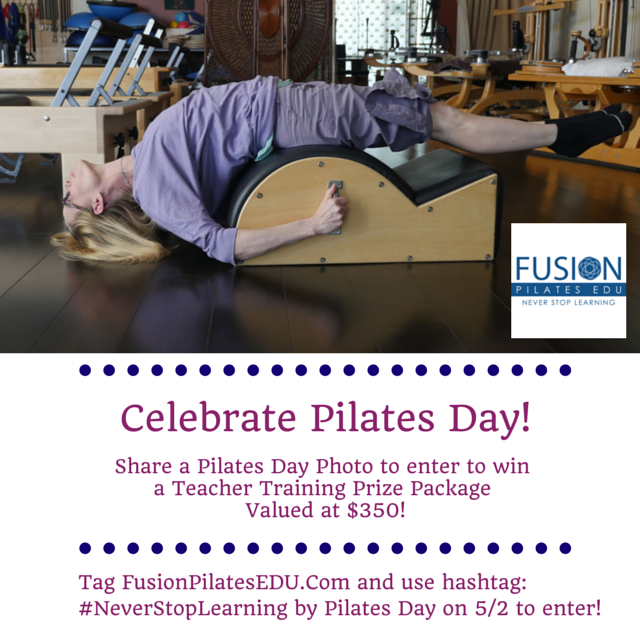
 THE PILATES DAY CONTEST!

Basically, this is a celebration of all things Pilates, so we want to see photos of Pilates in your everyday life … and give you a prize that will make you and your clients feel good! Check out our Pilates Day thoughts here.

To enter the contest:

  • Take a photo of something you love about Pilates in your studio, home, or wherever you are sharing Pilates in your life.
  • Share the photo on your favorite social network with hashtag #Neverstoplearning before midnight on 5/2.
  • We’ll repost and share our favorites and everyone who enters will be entered to win the Fusion Refresher Program ($349 value) for FREE!

Prize Details: In this Fusion Refresher Program, you’ll learn new ideas to expand your teaching tool kit to help you grow your Pilates business. In addition, you’ll have access to specialized courses with FusionPilatesEDU.com’s latest research on the pelvic floor, knee, hips, and scapula.Whether you’ve been teaching for 1-2 years or 10, you will love all the information in these courses and be able to use it in your practice right way!
 

Enter the Pilates Day Photo Contest with Hashtag: #Neverstoplearning

If you want to share your love of Pilates with more people, this is a good time to do it! Check out the Pilates Show for Pilates in Every day life inspiration

[ssba]

HAPPY PILATES DAY!

To celebrate Joe and Clara and the amazing method they invented which has brought us all together – we are offering some incredible packages!

Master Plan for New Teachers

$299 until 5/2 at 12am EST ($650 value)

Most Pilates Teacher Training programs overlook the essential preparation steps an aspiring teacher needs to take in order to to learn the Pilates method and business entirely, but that preparation is actually the foundation of your Pilates career! These modules cover the essentials of what you need to know before you walk into your teacher training and offer an apprenticeship program to deepen your learning as you progress.

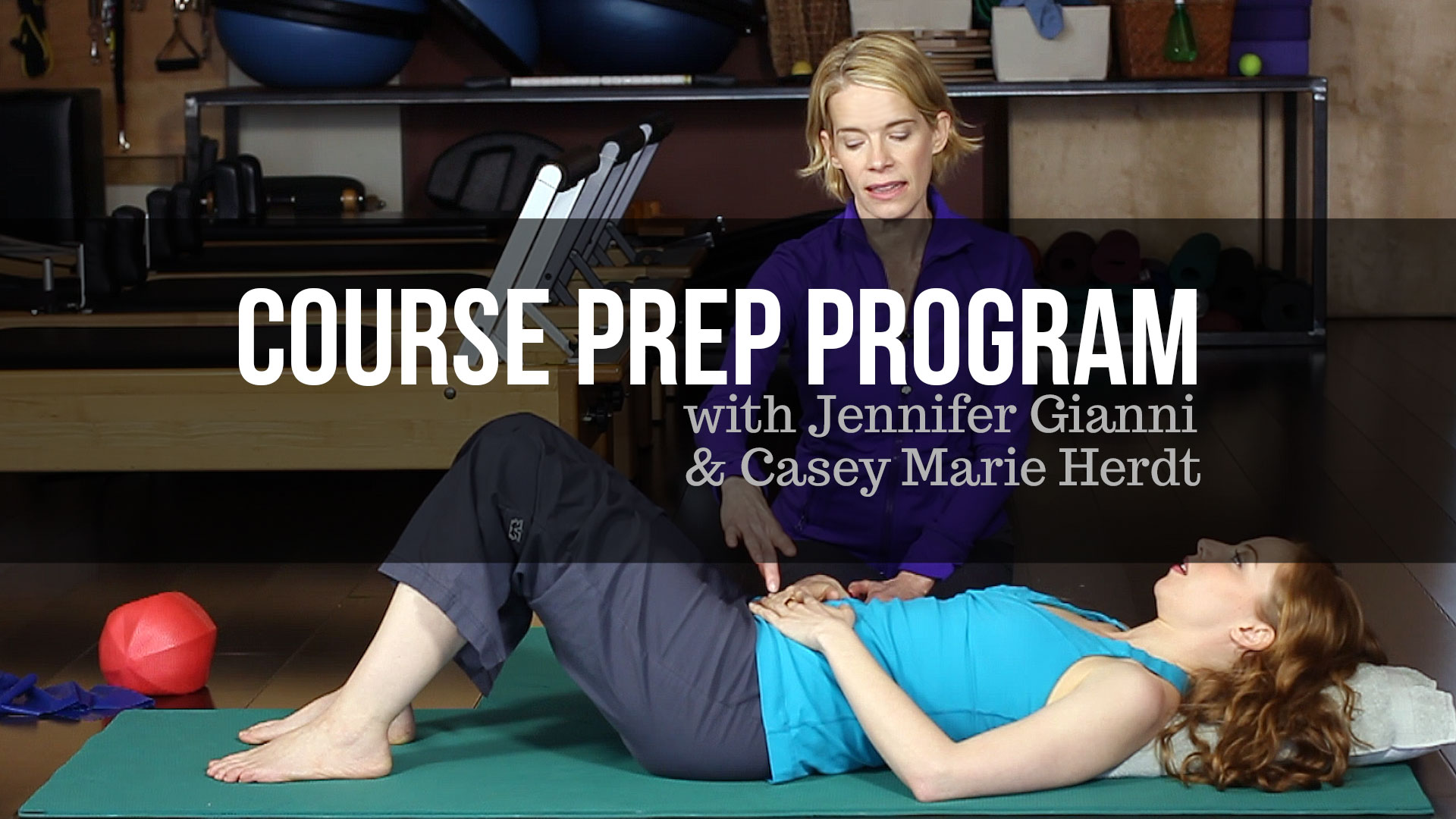
CoursePrepTitleApprenticeTitle

Comprehensive Course Prep $150.00 Value
Pilates Essentials included Value
Apprentice Program $499.00 Value

Master Plan for New Teachers – $649 VALUE!

$299

Brilliant Cues and Teaching Tools

$149 until 5/2 at 12am EST ($349 value!)

Teaching cues and tools come in many flavors, and from time to time, we could all use a a dose of inspiration to update our repertoire. In this Instructor Refresher Pack, you’ll learn new ideas to expand your teaching tool kit to help you grow your Pilates business. In addition, you’ll have access to specialized courses with FusionPilatesEDU.com’s latest research on the pelvic floor, knee, hips, and scapula.

Whether you’ve been teaching for 1-2 years or 10, you will love all the information in these courses and be able to use it in your practice right way!

RefresherTitlePowellPelvisTitlePowellKneeTitle

ScapulaTitlePosterialHipTitle

Comprehensive Refresher Program $349.00 Value
Pelvic Floor: The Foundation for Support $19.00 Value
The Knee $19.00 Value
Scapula Revolution $24.00 Value
Posterial Lateral Hip Workshop $19.00 Value

Brilliant Cues and Teaching Tools – $430 VALUE!

$149

Building Your Pre & Post Natal Client Base

$69 until 5/2 at 12am EST ($135 value!)

Keep your clients strong and healthy through their pregnancy and into motherhood! We can make such a difference during this important phase of a woman’s life. But we have to have the right information and we have to be safe!

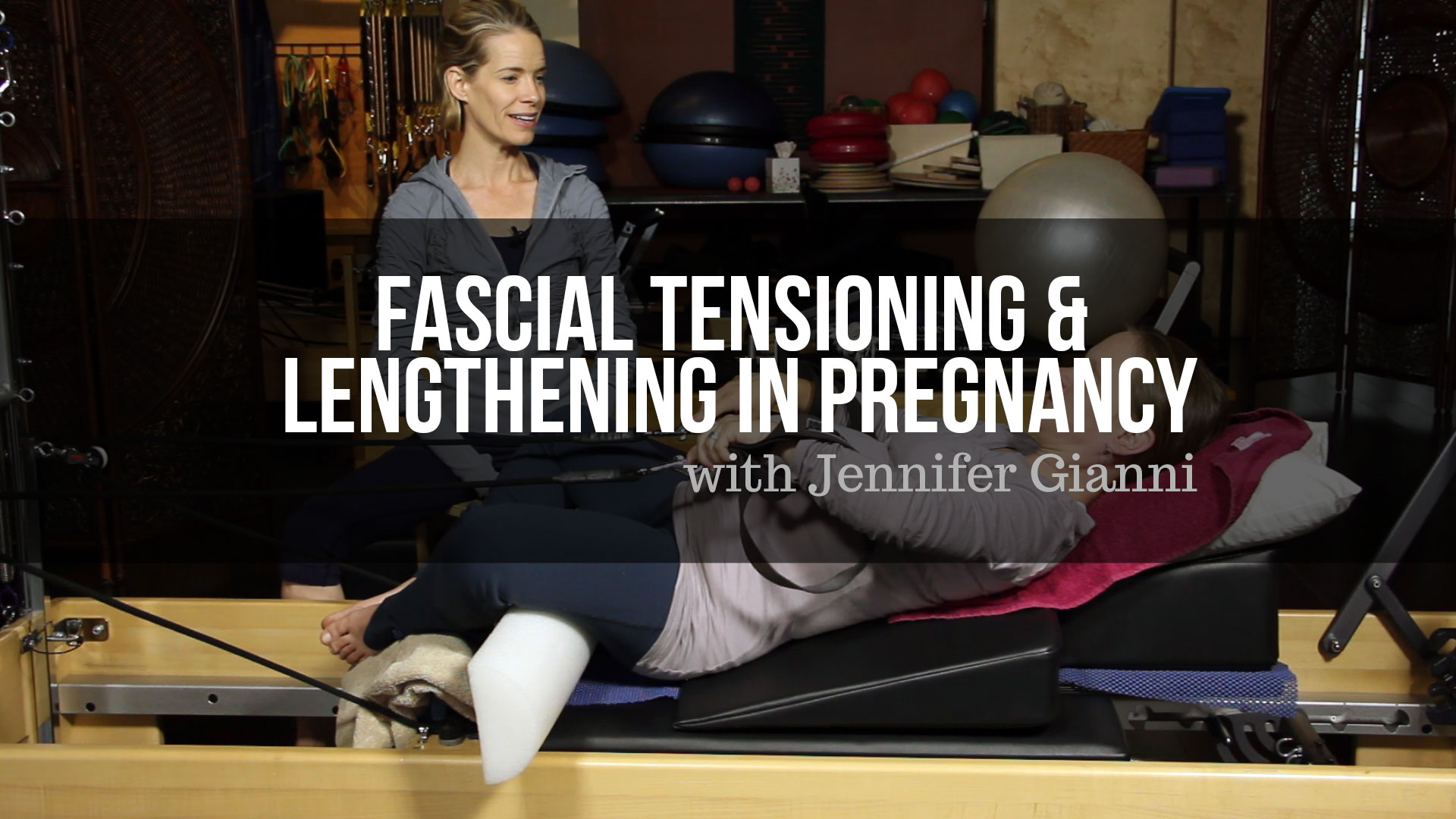
In this workshop package, you’ll learn how to work with both pre and post natal clients on the reformer, chair, and cadillac, and all about the changes in the body that should be considered in a safe Pilates program. Plus, you’ll get a whole workshop on Fascial Tensioning and Lengthening!

GianniFascPregMainTitleGianniWholeSystemFixMainProtocolChairCadillac protocol Reformer

Fascial Tensioning & Lengthening in Pregnancy $39.00 Value
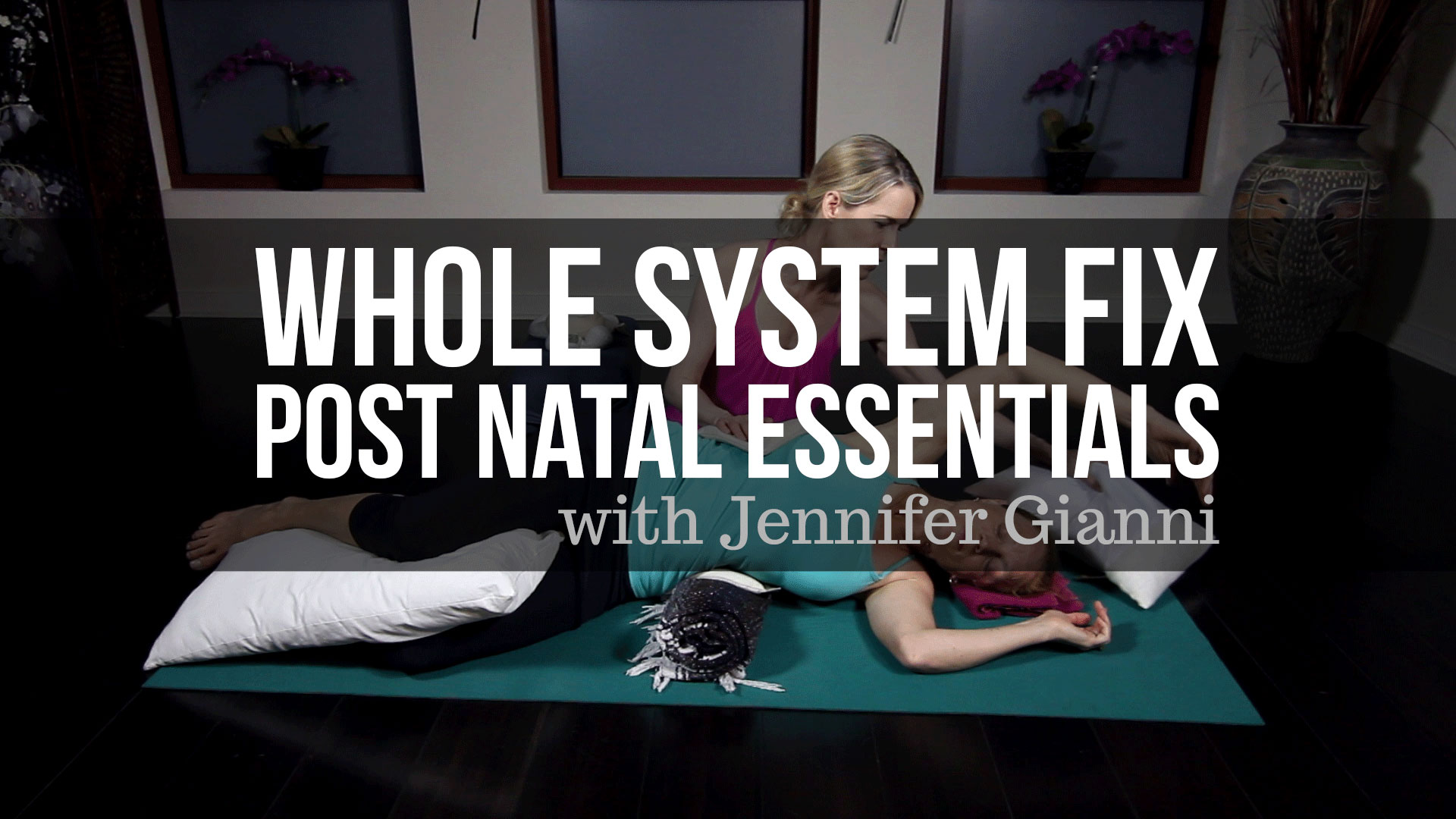
Whole System Fix: Post Natal Essentials $24.00 Value
Pre & Post Natal Protocol for Reformer $34.95 Value
Pre & Post Natal Protocol for Chair & Cadillac $34.95 Value

PRE & Building Your Pre & Post Natal Client Base – $135 VALUE!

$69

Special Bonus: Release Work Foundation Pack

FREE with every Pilates Day Order!

This sale only happens once a year! Act now and save plus with each Pilates Day order, you’ll receive two of our popular Release workshops absolutely FREE!

HerdtRelease1MainTitle GianniRelease&MoveTitle

Buy Practical Release: The Essentials $24.00 Value
Release & Move Foundational Mat $29.00 Value

FREE WHEN YOU BUY ANY OTHER BUNDLE ON THIS PAGE!


The Pilates Show! – Faux Reformer #2

In this episode, Casey uses a reformer without a reformer – again!

SHOW NOTES:

Find info on SmartSpine™ products HERE
Find info on the online Apprentice Program HERE
Find info on the online Refresher Program HERE
Find info on Casey’s online Release Workshops HERE

Have a question you’d like to see addressed? Have a comment? We want to hear from you!

Comment below, on Facebook, Twitter, or at the Forum!

The Pilates Show! – Your Inner Ninja, the Reformer, and Arm Jumping

In this episode, Jen revisits the Ninja principle, this time with arm jumping!

SHOW NOTES:

See the Wall Jumping episode HERE
Get info on Jennifer’s Hand Mechanics workshop HERE
Add your thoughts on Stephen’s question and check out the Good Postures for Labor post HERE
Find info on SmartSpine Products HERE
Find info on online Release Programs HERE.

Have a question you’d like to see addressed? Have a comment? We want to hear from you!

Comment below, on Facebook, Twitter, or at the Forum!

Pre-Pilates Strengtheners

bigstock-Cute-girls-working-out-in-a-gy-55274378We are constantly reminded of the toll gravity takes on our bodies and how much strength it takes to fight against it. This is easily demonstrated when we see that sweet elderly woman crossing the street with a hunched back craning her neck so her eyes can find the horizon.

To begin fighting against the enormous force of gravity as well as all of our other duties and stresses that life heaps on us, we must first address posture. Finding the proper posture is a balancing act between the strength and flexibility of our muscles and the mobility of our joints. We want everything to stack properly, which means keeping all of the natural curves of our spine intact. The cervical (neck) spine has a concave curve, the thoracic (upper/mid back) spine has a convex curve, and the lumbar (lower back) has a concave curve. The perception of proper posture being a straight back is an incorrect one. We need these natural curves in our back for it to function properly.

A key player in the posture game is the strength and flexibility of our upper back, the thoracic spine. Pilates works all the muscles in the body by stretching and strengthening simultaneously. This balance is the key to keeping the upper back strong and limber. Pilates is an integrated, holistic method. In the Pilates system, muscles are not worked in isolation but work in sync with the core muscles. Everything radiates from the center. So, for example, when doing upper back exercises, it is important to understand that you need to strengthen your core while simultaneously working your upper back. If you don’t incorporate these very important Pilates principles you will only succeed in developing the large muscles in the upper back (traps and rhomboids) while becoming hunched over because your core muscles (those muscles closest to the skeleton, that literally hug the bones) are not strong enough to hold the spine upright.

With the next two upper back Pre-Pilates strengthening exercises you’ll improve your shoulder stability, strengthen the upper back muscles needed for improved posture, and enhance your head and neck stability while also reducing the chance of upper back and neck injury.

Exercise: Table Top

• Start on all fours on the hands and knees.
• Line the wrists up under the shoulders and the knees under the hips.
• Modification: If you experience wrist sensitivity, make a fist and balance on your knuckles instead of the palm. Or fold the front of your mat up a few times and place the heels of the hand (at the bottom of the palm) at the edge with the rest of the palm and fingers on the floor. This will lessen the crease at the wrist and will help relieve the sensitivity and/or pain.
• Reach the spine long in both directions.
• Find all the natural curves in your spine. Make sure you are keeping the sitting bones wide and not gripping the glutes.
• At the same time, make sure your collar bone is wide and the shoulders are gliding away from the ears.
• Pay attention to the shoulder blades and concentrate on keeping them spread apart across the back. In this exercise, we are trying to strengthen the muscle under the shoulder blades, the serratus anterior. It is this muscle’s job to keep the shoulder blades apart.
• Keeping all four points of your table square, slide the left arm forward on the floor with the thumb pointing to the ceiling.
• Once the arm is fully extended, exhale and bring the arm up from below the shoulder blade so the hand and shoulder are in line.
• Hold and take a few inhales and exhales.
• Everything in the spine should have remained the same when the arm lifted.
• Gently bring the arm down and switch sides.
• Repeat 4 to 6 times on each side.

For an advanced version of Table Top, you can lift the arm and opposite leg at the same time.
• On the inhale, extend one arm and the opposite leg out onto the floor.
• On the exhale, lift the long limbs up so they are in line with the torso.
• Nothing in the back should tilt or collapse.
• The spine should stay exactly the same as the arm and leg are lifted.

Exercise: Prone Stick Up

• Lie prone (on your belly) on a mat.
• Spread your legs hip distance apart.
• Rest your forehead on a folded towel.
• Extend your arms out to the side forming two 90 degree angles. (Keep the shoulder in line with the bent elbow and the bent elbow in line with the wrist.) The arms are in the stick up position (as if you were being held up).
• Keep the feet pressed into the floor.
• Inhale and lift the head and torso off the floor.
• Keep lengthening from both sides of the spine as you hover up.
• Exhale and slowly release.
• Remember to keep the back of the neck long and the collar bone wide as you hover. Also keep reaching through the crown of the head.
• Do 5 repetitions and make sure to keep the shoulder blades apart as you hover up.
• Do another 5 repetitions, this time bringing the shoulder blades together as you hover up.

Thanks- comments welcome!

~ by Jennifer Gianni