Author Archives: Angelo Gianni

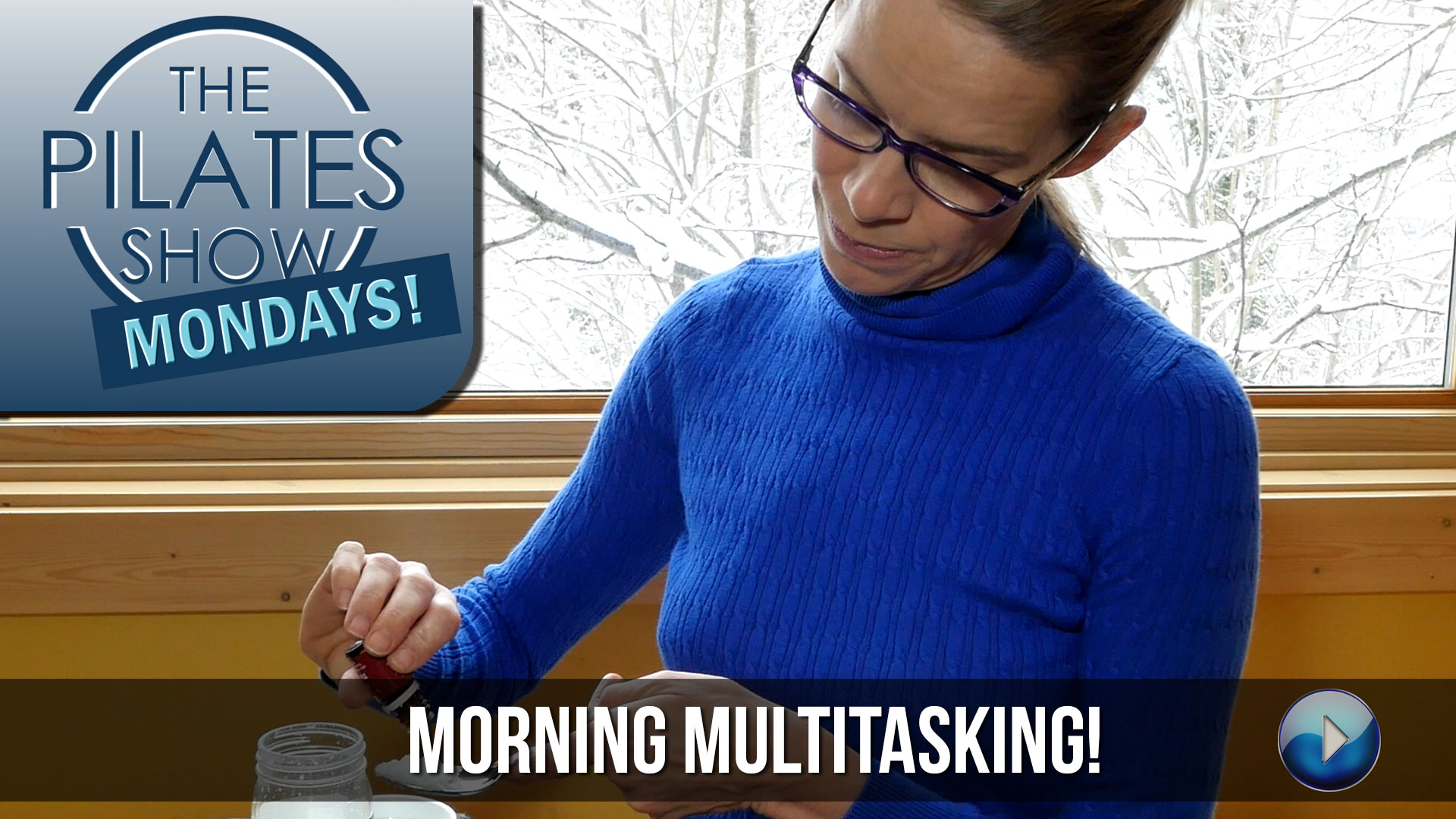
The Pilates Show Mondays! – Morning Multitasking

In this episode, Jen tries to do two things at once!

SHOW NOTES:

Find info on Living Young Oils HERE.
Recipe: 1 TBS virgin coconut oil + 1 or 2 drops of Theives or the essential oil of your choice. Swish for 20 minutes.

Have a question you’d like to see addressed? Have a comment? We want to hear from you!

Comment below, on Facebook, Twitter, or at the Forum!

The Pilates Show! – Your Inner Ninja and Stair Climbing

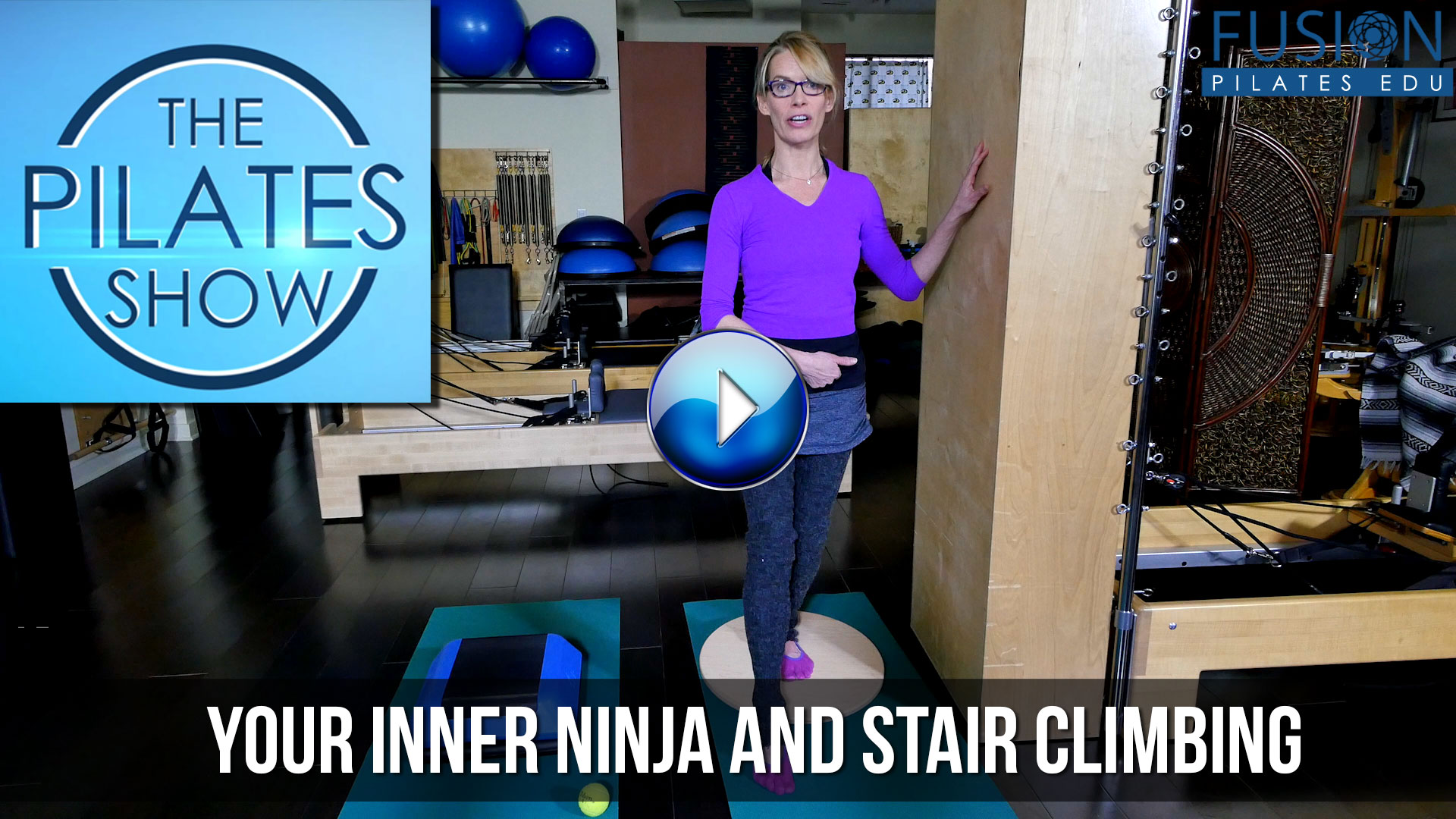
In this episode, Jen creeps stealthily up the stairs to pounce on your head with some Fascial fitness love and answers a question about pre-tensing for fascial movement.

SHOW NOTES:

Check out other posts featuring release work HERE.
Check out our online workshops featuring release work HERE.
See a previous episode on Scoliosis HERE.
Review the PMA’s Scope of Practice HERE.

Have a question you’d like to see addressed? Have a comment? We want to hear from you!

Comment below, on Facebook, Twitter, or at the Forum!

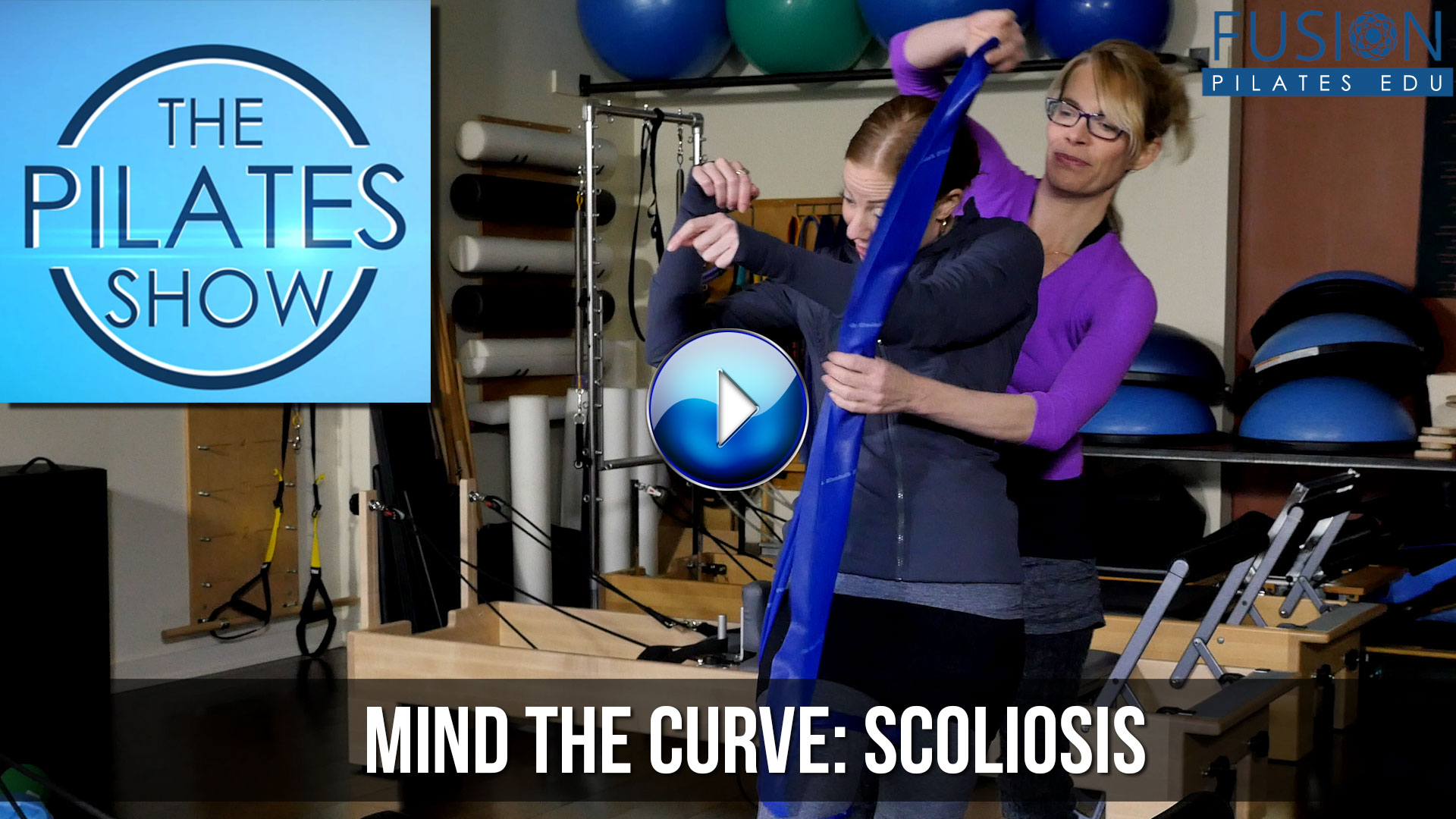
The Pilates Show! – Mind the Curve: Scoliosis

In this episode – Casey speaks from experience on Scoliosis.

SHOW NOTES:

Find info on SmartSpine™ products HERE.
Add your thoughts about AlliS’s question on the forum HERE.
Find info on our Release Workshops HERE.
Find out about the props used in this workshop HERE & HERE.

Have a question you’d like to see addressed? Have a comment? We want to hear from you!

Comment below, on Facebook, Twitter, or at the Forum!

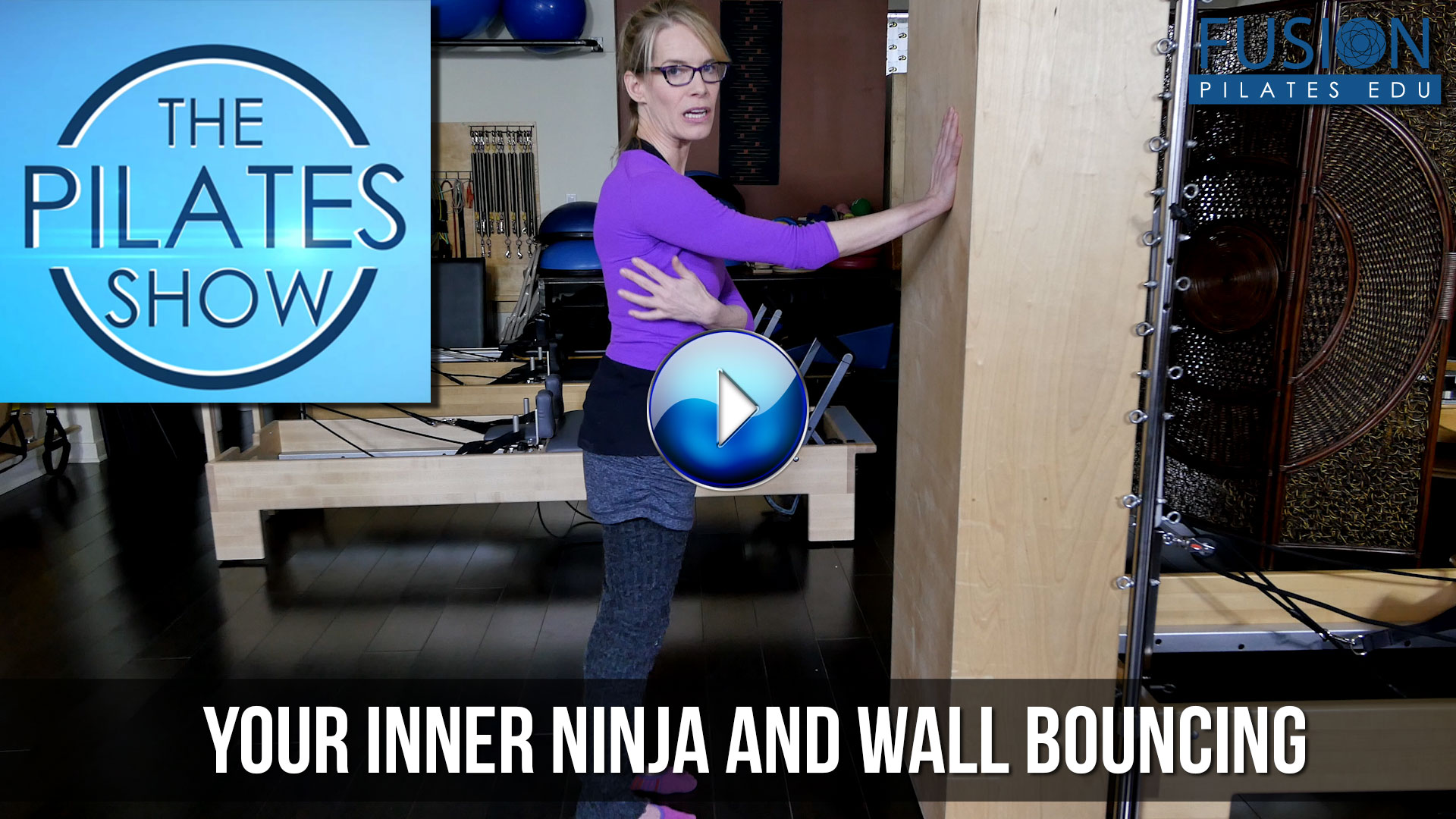
The Pilates Show! – Your Inner Ninja and Wall Bouncing

In this episode, Jen is going to get all Ninja on your ass – and will answer a question about pre-tensioning of the fascia!

SHOW NOTES:

Find other posts about Fascial Fitness HERE.
See the Preparatory Counter Movement and Elastic Recoil Post HERE.
Check out these online workshops on Fascia HERE.
Add your thoughts about Katie333’s question on the FORUM.

Have a question you’d like to see addressed? Have a comment? We want to hear from you!

Comment below, on Facebook, Twitter, or at the Forum!

The Pilates Show! – Hanging Out with the Shoulder Girdle

In this episode, Casey is going to deal with Shoulder Girdle and will answer a question about men and the pelvic floor.

SHOW NOTES:

Find other posts about Anatomy HERE.
Check out Lesley Powell’s Scapula Revolution workshop HERE.
Add your thoughts about Margherita’s question at the FORUM!
You can find some of the props used in this episode HERE..
Find info on Casey’s online release workshops HERE..

Have a question you’d like to see addressed? Have a comment? We want to hear from you!

Comment below, on Facebook, Twitter, or at the Forum!

The Pilates Show Mondays! – Get On the Floor

Welcome to The Pilates Show!

The Pilates Show Mondays are short episodes where we get the heck out of the studio and explore our Pilates Lifestyle. The main show is on Wednesdays where we’ll cover Pilates Tips and Techniques and answer viewer questions. On Fridays, enjoy our comic strip, “The Pilates Dork”.  Join us every week!

In this episode, Jen gives some simple tips how how to give your spine and sacrum some much needed love…

Fascial Anatomy

FascialOk, get ready. There is some mind numbing anatomy later in this post. But I want to tell you that it is all going to end up at a place where we can make sense of it. Of course for that to happen you might have to pull out 2 or 3 anatomy books.  But this intense focus on this anatomy relates to what we can do in the studio.

In a previous post I promised to talk about the Thoracolumbar Composite (TLC) and its importance to our work as movement therapists and to our understanding of our amazing fascial body suit.

I want to start with four basic , foundational concepts or principles that my mentor, Marie Jose Blum , has been telling her students for the past 20 yrs…

a) With a neutral position of the pelvis , the bones narrow but the tissue widens. Just stay with me…
b) Our inner corset mechanics work because the fascia is a shared entity  especially the line of the deep Transverse abdominals and the deep spinal muscles. So the front hip bones can come closer together and the sit bones can widen without destabilizing the sacrum because of this continuity of tissue.

c) The Transverse Abdominis (TrA) is a important structure and worth getting familiar with.  It is a important feed forward mechanism in conjunction with its core conspirators.
In my next post I will talk more about the Transverse and its many attributes. Not enough time here.

d) The multifidus is the lifeline of what is holding us from deep inside.
I wanted to begin with that because the difficult anatomy that we are about to dive into scientifically proves what MJ has been teaching us through movement all these years.

In Dr. Andry Vleeming’s lecture, study and article “The thoracolumbar fascia : anatomy, function and clinical considerations ” in the Journal of Anatomy (2012), he goes into depth about the TLC and its importance in our ease of movement and stability along with the rest of the TLF and its tissue partners in crime.

Forgive me for what you are about to deal with here – but I beg you to keep going…

The posterior layer of the TLF ( thoracolumbar fascia) is divided into a superficial and deep laminae. The deep portion of this posterior layer is a retinacular sheath surrounding the paraspinal muscles (The iliocostalis, longissimus and multifidus) This deep laminae of the posterior layer of the TLF  has been labeled  the Paraspinal Retinacular Sheath (PRS). To the lateral potion of this sheath (around the paraspinal muscles), there is a thickening of the connective tissue and this is the point where the PRS joins with the aponeurosis of the deep abdominals, the Transverse Abdominals. Yes! This connection has been known for a long time but Vleeming’s new insight and detail on this subject and the fine mechanics of this area are incredible. If you want more read the article.

Ok, come up for air and dive back in to the depths…

Below the level of L4-L5 where the aponeurosis of the erector spine and multifidus muscles become thicker , Dr Vleeming states : “The aponeurosis of the erector spinae fuses to the posterior overlying deep lamina and the superficial lamina (this is the posterior layer of the TLF) to form an inseparable composite, termed the TLC. The TLC adheres tightly to the PSIS (posterior superior iliac spine) and the border of the sacrum. It then covers the sacrotuberous ligaments eventually reaching the ischial tuberosities.” Yes! So it makes even greater sense that when we activate our Inner Corset and the top of the pelvis narrows and the bottom widens that the sacrum can stay secure and the SI joints are not unstable. Of course this is the optimal and original design of our bodies and the way it should function. We all know clients and teachers alike that have very unstable and/or unyielding Sacroiliac (SI) joints. Keep reading, you will find some clues on how to balance that for yourself and your clients!

It is well known and studied that the Transverse Abdominis and Oblique muscles create a force closure of the sacrum and ilium thereby stabilizing the pelvis in an upright position by pulling the ASIS’s ( anterior superior iliac spines) of the ilium towards each other. But what is preventing the back of the ilium from moving laterally and destabilizing the sacrum and opening the posterior aspect of the sacroiliac ( SI)  joints? I know I already answered that above but I want to kind of hit you over the head with this. Sorry…

The TLC (thoracolumbar composite) is key for the job of resisting the lateral movement of the back of the pelvis when the front hip bones move closer together.  The PSIS ( on the back of the ilium) is anchored by the TLC and because of this a contraction of the Transverse Abdominis is able to help compress the SI joints and create a force closure securing the sacrum. It seems that the shared connective tissue plays a huge part in how we function, transfer load and work share in the body.  Vleeming states ” It has been demonstrated that active muscles will transfer forces outward as well as longitudinally and therefore deform their associated connective tissues, depending on the magnitude and direction of forces generated (Brown & McGill, 2009). Huijing (2003) and Aspden (1990) have shown that muscle force transmission is not exclusively a serial process from muscles fibers to tendon, but that an additional lateral component of transmission occurs through the surrounding connective tissue connections.”  Ahh, the fascia …

Vleeming also points out that this structure working in an optimal way is also governed by the optimal mechanics of the Multifidus which he calls a “hydraulic amplifier mechanism “. He states that a weakening or fatty involution of the multifidus structure creates a unstable environment for the whole area of the lower back and pelvis. The multifidus is the lifeline of our inner structure and is greatly ignored. When we are young our spring system and inner corset works naturally for us up to a point. If we overuse or under-use our system imbalance reigns. We mostly tend to live in our outer corset , in our extrinsics, and structures that live in our deep body and are suppose to hold us from inside go to sleep and sometimes seem to disappear. As we grow older without these deep structures hugging us we break down.

The good news is that we as Movement and Pilates professionals have tons in our tool box to help bring back the biomechanics we were born with. Part of my point in this post is to say ” We as contemporary Pilates instructors have been paying attention to all of what Dr Vleeming is talking about for years and years. And now it is great to get validation for what we have intuitively known and that we are helping our clients come back to what is natural and right for the human body. This type of movement and awareness of anatomy brings us closer to who we truly are and is our birthright.” It is exciting and there is so much information to bathe in. Let me know your thoughts and discoveries.

Whew, you made it to the end!

~Jennifer

Using Pilates to Prevent and Heal Lower Back Pain: Stretches

Using-Pilates-to-Prevent-and-Heal-Lower-Back-Pain--Stretches

Millions of us live with moderate to severe back pain on a daily basis. Our hectic lives of spending long hours at a desk, in front of a computer, or behind the wheel of a car makes it difficult to maintain good back health. Many of us are learning what professional athletes have known for years–Pilates is the key!

Pilates has been incredibly popular within the field of professional sports for years, and now the general public is also experiencing how Pilates can help improve physical function and control pain. Building strength, flexibility, posture, balance, and coordination are all emphasized within any Pilates exercise.

We want to use the following Pilates-based stretches as a way to avoid future problems in the low back, hips, and knees and/or to repair damage that’s already been done.

Doing these very simple stretches on a daily basis will also help you with your Classical Pilates mat and equipment work. These stretches will open the lumbar spine, allowing the lower spine to easily undulate between flexion and extension. So mat exercises such as the roll-up, the roll-over, corkscrew, bridging, and teaser (to name a few) will start to feel smoother and less strenuous on the low back and hips.

Try this three- to four-minute routine daily for two weeks and see what a difference it makes in your daily activities, as well as the improvements it brings to your Pilates and other exercise endeavors.

Exercise: Standing Side Bend Stretch

• Stand with your right side toward a wall.
• Cross the right ankle over the left and side bend toward the wall, fanning the left ribcage. Place one hand on the wall to help stabilize you.
• Hold for twenty to thirty seconds and switch sides.

This stretch will help to lengthen the whole side body which will translate into more freedom in the lower back and hips.

Exercise: Chair Twist

You’ll need a chair with a back for this one.

• Sit on the chair with the right side of your body facing the chair back.
• Your hips and shoulders should be square to the front. Keep them there!
• Keep the hips square to the front and rotate the ribs so that the shoulders and eyes move to the point that they’re facing the chair back. Again, keep those hips in their original position: don’t let them move.
• Use your hands on either side of the chair back to stabilize the rotation.
• Make sure the hips, knees, and feet have not shifted as the ribs rotate.
• Hold for twenty to thirty seconds on each side.

This stretch is great for mobilizing the spine and increasing flexibility which takes stress away from the hips and lower back. This creates openness and freedom in these areas.

Exercise: Sitting Pigeon

• Sit on a chair facing front.
• Cross the right ankle over the left knee, making sure the ankle joint is situated past (to the left of) the leg.
• Flex the right foot. (Bend your toes up toward your shin.)
• Sit up tall with the sternum over the pubic bone.
• Apply a bit of gentle downward pressure on the inside of the right knee.
• If you want to go deeper, start to hinge from the hips while keeping the back flat.
• Either hold the torso in this flat back hinge or round the back over the leg, whichever is most comfortable and gives you the best stretch.
• Keep the weight equal on each sitting bone. Don’t let the body rock to one side.
• Hold this for twenty to thirty seconds and then switch sides.

We hope you found these tips and exercises helpful! Let us know your thoughts below!

Kathy Grant: A Teacher’s Teacher

Kathy Grant

Photo by Morikawa Noboru courtesy of Bridge Pilates
http://www.bridgepilates.com/pilates.html

I never had the privilege of meeting or working with Kathy Grant, but have many friends and colleagues who did work with her extensively. My mentor, Marie-José Blom from Long Beach Dance Conditioning, was quite close to her and speaks of her often. In fact, on the day of Kathy Grant’s death I was with Marie-José in a Pilates Leadership class. A teacher from the studio interrupted our class to give us the news of Kathy’s death. Marie-José was devastated and had to pause and sit down (two things she rarely does while teaching). She then began to tell us what an amazing teacher and person Kathy had been and that this was heartbreaking for the Pilates community.

From researching Kathy for this article, I have come across many who have been deeply influenced by her work, not only changing them as a teacher but also as human beings. Along with her passion for the Pilates method, she was an active supporter of a clean environment and of protecting animals. As a former dancer she was also a huge supporter of the arts. Pictures of Kathy in the 1950s dancing are amazing. What a beautiful, vibrant, strong young woman.

Kathy was the first Black woman to teach Pilates when she started in 1957. She and another first generation teacher, Lolita San Miguel, were the only two people to ever receive a certification to teach directly from Joseph Pilates. Since 1988, Kathy had been based at NYU, Tisch School of the Arts where she taught a year-long Pilates course until her death. She faithfully kept this class up even though traveling to and from the class as she got older began to be a much harder task. Lolita San Miguel mentioned Kathy’s stubbornness and devotion to her students at NYU. Lolita had talked to Kathy about slowing down, but Kathy would not hear of it.

Kathy mentored and trained some of the best Pilates teachers in the business, including Ellie Herman and Jillian Hessel. She was also a great inspiration to already established greats such as Mary Bowen, Marie-José Blom, and Ron Fletcher. Jillian Hessel came to Kathy as an injured dancer who had a very overworked and misaligned body. Kathy wrote the following about working with Jillian: “I feel that her coming to me as an injured dancer all those years ago has helped her be a more inventive and patient teacher of Pilates. Jillian had to work hard to get the concepts of Pilates into her body. She understands the potential fear, pain, and frustration of a beginning exerciser because she had to start over from the beginning to retrain her misaligned back.” Kathy was very interested in teaching instructors how to take care of their bodies and to be inventive and compassionate.

From all accounts her humor and enthusiasm for learning were infectious. She also knew how to teach without shaming. She embodied what we should all strive for as teachers. One of her closest proteges, Blossom Leilani Crawford, describes Kathy’s talent perfectly: “Kathy treated everyone with the same nurturing, iron hand and with an eagle’s eye on the details. She insisted on excellence, both from herself and from her students. She had a work ethic that never wavered–always arriving early and always wanting to do better the next time. Not better than anyone else, just better than she did before.”

Kathy Grant was truly one of a kind and will be greatly missed, but her work will continue through all the brilliant teachers she was able to touch.

~ by Jennifer Gianni

Mary Bond Interview

We were so happy to have Mary Bond join us in Asheville for an amazing live workshop and to shoot a couple of great online workshops. If you’re not familiar with her work, you should be! Enjoy this interview – and see below for some more info on Mary.

Hope you enjoyed the interview – please comment below. Thank you Mary!

Mary Bond’s first workshop with Fusion titled Face/Spine Relationships & Spatial Perception is live! Check out the overview video below…

Look for Gravity and Support – coming soon….

Links mentioned in this interview:

Mary’s Blog

The New Rules of Posture: How to Sit, Stand, and Move in the Modern World, by Mary Bond

Balancing Your Body, by Mary Bond

The Rolf Institute

Cyber Monday

freebies2deals-cyber-monday-sales

MASSIVE DISCOUNTS! TODAY ONLY!

Cyber Monday is one of the only days of the year that we offer discounts on Online Pilates Workshops.


SALE ENDS TODAY – ACT NOW!!!
click the links to see course descriptions & details…

Online Pilates Apprentice (Comprehensive): SAVE $300.00!     Use Promo Code: CYBERAPPRENT

Online Pilates Refresher (Comprehensive):  SAVE $150.00!     Use Promo Code: CYBERREFRESH

Online Pilates Course Prep (Comprehensive: ONLY $99.00!      Use Promo Code: CYBERPREP

JENNIFER GIANNI

Pre & Post Protocol Comprehensive:             ONLY $29.00!      Use Promo Code: CYBERPROTO

Whole System Fix: Post Natal Essentials       ONLY $14.00!      Use Promo Code: CYBERPOST

Fascial Tensioning & Lengthening in Pregnancy ONLY $19.00!  Use Promo Code: CYBERPREG

CASEY MARIE HERDT

Practical Release:The Essentials                     ONLY $14.00!     Use Promo Code: CYBERPRAC

Practical Release: Pelvis & Femur                   ONLY $14.00!      Use Promo Code: CYBERPELV

Forever Access Price goes up in 2015 – so add it now!
Keep all of your purchased workshops for as long as you’d like – for only $49.00 per year!

Promo Codes expire midnight 12/2/2014.

Working as an Independent Contractor

It’s rare that you will find a Pilates Studio which hires instructors as employees. For the most part, you will be working as a Pilates Instructor as an Independent Contractor. There are pros and cons to working as either an employee or an independent contractor.
Working as an Employee

In most cases, you will receive a set salary and will not be paid per session taught. Usually, this will mean that your rate per session will be much lower than if you worked as an Independent Contractor. If you work as an employee, the studio can set your schedule and has the right to ask you to sign a non-compete contract and to agree to any number of rules and regulations as they see fit. One upside of working as an employee is that you will have a set income that you can count on every two weeks and you will have taxes taken out through payroll. But in most cases, you will not be free to work in other studios, you will not be able to set your own schedule, and you will have just less freedom in general.

Working as an Independent Contractor

In most cases, you will be paid by the session. Most studios give you a percentage of whatever the client pays or you might get a set dollar amount for mat classes, another amount for equipment classes, and another for privates. In almost all cases, an Independent Contractor will be paid a higher rate for each session taught than they would get if working as an employee. The relationship between yourself and the studio will be slightly different than it would be if you were an employee.

In our studio, since our Instructors are independent contractors and not employees, they are expected to be responsible for a number of things that an employee might not be.

• All of our instructors are responsible for setting their schedules. They are responsible for checking the studio schedule regularly to see if new clients have been scheduled with them; it’s up to the instructor to keep up with this.

• On the other side of the coin, our instructors are also responsible for marking themselves as unavailable well in advance of trips, doctor’s appointments, or for any other reason. If they are going away, it is up to the instructors to find subs for their classes. If an instructor sets his or her schedule as available, that’s it. Once a client has been scheduled, the instructor can under no circumstances make themselves unavailable. This is all part of being an independent contractor. You have more freedom, and you have more responsibility to act professionally on your own without being “managed.”

• Instructors are expected to clean up after themselves and their clients and to leave the studio as they found it (or better). It’s the same as hiring an independent contractor to put up an addition to your house. First, you’d want to make sure they’re skilled and experienced. But once the job starts, you don’t expect to have to micromanage them. They’re professionals, they know what they’re doing, and that’s why you hired them in the first place.

• As an independent contractor you should invoice the studio you work for every two weeks (or according to their pay schedule). Your invoices should be clear and detailed and should include the date, time, name of client, service rendered, and the fee. Your invoice should also include your name, mailing address, etc. Submit your invoices on time. Nothing annoys me more than to have invoices come in late because it holds up the process for everyone.

As an independent contractor there are also some restrictions on what the studio will have a right to ask of you. Here are a few you should be aware of:

• You should be allowed to set your own schedule. This doesn’t mean you can do whatever you want. If you tell a studio that you can work only on Mondays from 9 am until 12 pm, well, they don’t have to do business with you. This works the same way as if the contractor you’re thinking about hiring at your house said he can work only from 2 am until 4 am. If you don’t work with the studio and make yourself available for times that are needed, then you might not be invited to work with them at all.

• You should not be told that you can’t work anywhere else. You might not want to work anywhere else, but sometimes new teachers need to work at multiple studios to make ends meet. As an independent contractor, you have every right to do this. In our studio, our only wish is that there be ZERO solicitation of our clients to visit other studios and that there be ZERO solicitation at other studios for their clients to visit ours. This seems like common sense, but things can get messy very quickly if instructors try to do this. It is completely unethical and we will absolutely end our relationship with any instructor who does this. It’s unfair to everyone involved. If you do work at various studios, just keep it to yourself when it comes to clients. If a client hears it from a friend and tries to bring it up, this conversation can easily be ended by simply saying, “It’s not ethical for me to talk about other studios while I’m working here.”

Thoughts? Let us know below!

Preparatory Counter Movement and Elastic Recoil

In this video post I’m going to add on some exercises to continue the up training of our fascial body suit and the concept of preparatory counter movement and elastic recoil. Seated springy side bends, Kneeling arch/curl, Crab modification and open leg rocker are all offered as ways that we can build up to the more complex and advanced Fascial Fitness exercises such as the Flying Sword and the Oblique, Reach and Pulse.

~ Jennifer

First Training Principle of Fascial Fitness & Preparatory Counter Movement

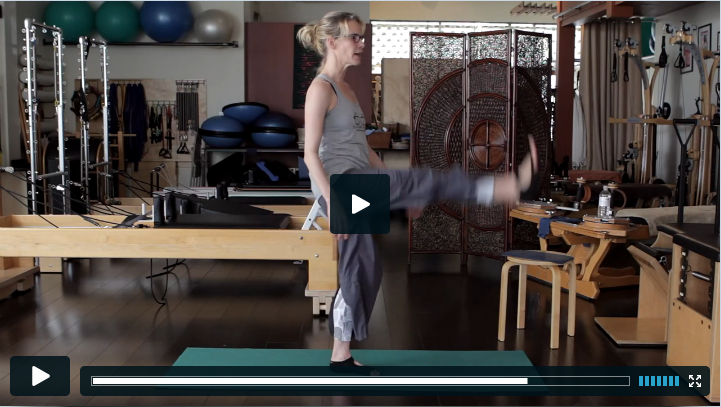
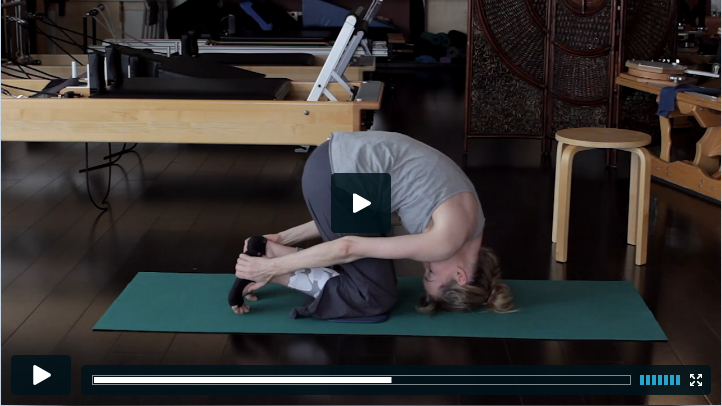
I am recently back from Fascial Summer School in Ulm, Germany where I studied with top fascial researcher Robert Schleip and Fascial Fitness creator Divo Muller. These brilliant researchers have come up with 5 principles for training the fascia. I want to explore the first principle, preparatory counter movement. In this video post I’ll look at how to bring the non mover with less intelligent fascia up to speed. I explore some basic, simple fascia training exercises such as arm swing and leg swing to experiment with the feeling of the preparatory counter movement and the transition into the elastic recoil. Enjoy the video and let me know what you think!

~Jennifer

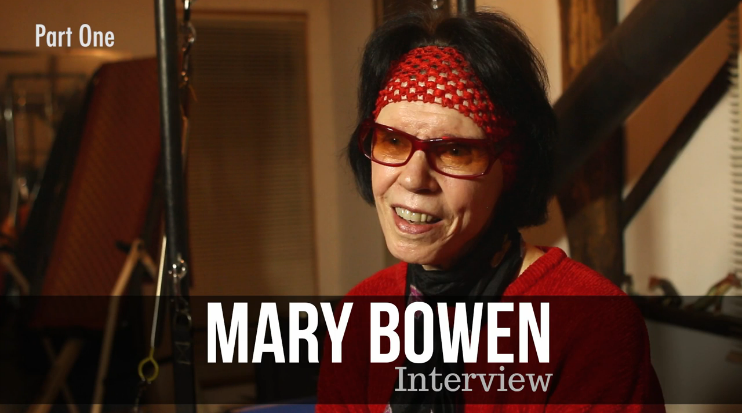
Mary Bowen Interview

Please enjoy this interview with Pilates Elder Mary Bowen. We had such a good time hanging out with her while she was here filming her online workshops and teaching her Pilates Plus Psyche and Lifelong Pilates. If you’ve studied with Mary, you’ll know that her energy and fullness of life is simply undeniable.

This interview took place in her home studio in Connecticut earlier this year.

Please make sure to check out Mary’s online workshops right here!

Check out Mary’s online workshop – Taller with Age…


Part One


Part Two


Part Three


We hope you enjoyed this interview with Mary. Share your thoughts below!

The Thoracolumbar Fascia

oscar

image from geeksandcleats.com

by Jennifer Gianni

I just got back from teaching a 12 hour Anatomy in Clay class in Hilton Head Is., S.C. at Core Pilates. It was a fabulous – a curious group will do that to a class. Twelve hours is never enough time and this was especially the case with this ‘hungry for knowledge’ group I had in Hilton Head. It went by way too fast and then driving home a couple of things that I didn’t have time for in class gnawed away at me. A big one was detail about the Thoracolumbar Fascia. So I am writing this 1) because questions about the TLF kept coming up within the 2 day course and 2) it continues our exploration into the world of fascia!

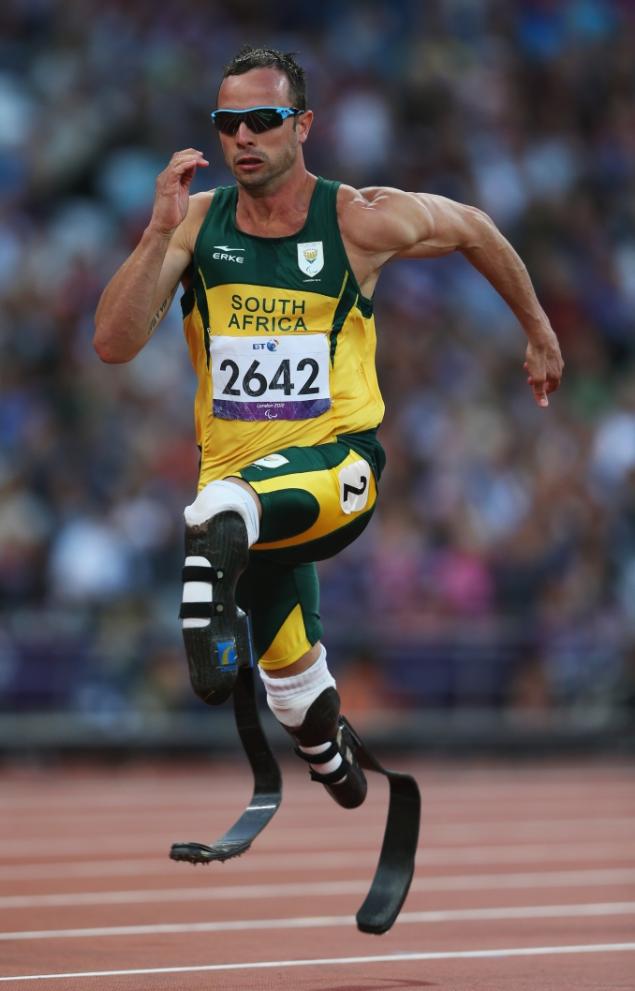
In Ulm at the Fascial Summer School, one lecturer/scientist/bodyworker that I was fascinated with was Thomas Findley. In his lecture and article ” The Fascial Organ” (in MA Hutson (ed) Oxford Textbook of Musculoskeletal Medicine, 2nd Edition 2014), Mr. Findley talks about the running ability of Oscar Pistorius, “the double amputee excluded from the regular Olympic games for fear that his bilateral below knee prostheses gave him an artificial advantage over athletes with normal calf muscles, shows that lower leg muscles are not sufficient or even necessary forces in propelling the human body.” Now that is a paradigm shift, right? He goes on to state that because of Mr Pistorius and others like him, it is becoming clearer and clearer that “models of movement based on muscles and bones were challenged by the reality of motion which could not be explained.”

On the ride I kept thinking about this lecture and when I got home the first thing I did was run to my notes from the Summer School. I found this lone sentence that spoke very loudly to me from Mr Findley, “In the low back, lumbar fascia needed to be added to the model to account for movement capabilities.” And I had to dig deeper. My mind went to another fabulous lecture and article by Dr Andry Vleeming (Journal of Anatomy 2012, The Thoracolumbar Fascia: anatomy, function and clinical consideration). The TLF is sometimes thought of as just a big piece of packing tape that is slapped onto the lower back and sacrum. However, it is so much more interesting and complex. It is actually comprised of “several layers that separate the paraspinal muscles from the muscles of the posterior abdominal wall, quadratus lumborum (QL) and psoas major.” And through its many layers it has connections all the way up to the cranium and arms and down to the sacrum and legs. But it is never a flat overlying sheet (and this is true for any other tissue in the body) but it waves in and out (going from deep to superficial ).

Vleeming states, “The Thoracolumbar fascia is a critical part of a myofascial girdle that surrounds the lower portion of the torso, playing an important role in posture, load transfer and respiration.” Another paradigm shift, right? One of my favorite images in this study is when Vleeming writes that “the lumbosacral region can be conceptualized as the union of three large levers: the spine and the two legs. These movement arms are united by the Thoracolumbar Composite of fascia and aponeuroses (the TLC is a thickening of the posterior TLF at the PSIS and there will be much more on this in the next post!!!!)

This fascial and aponeurotic composite is affected through the attachment of several large group of muscles: the bridging muscles from the upper extremity; muscles of the lower extremity; and the torso muscles “including both the front and back components of the torso.

From all the massive amounts of really good research that we have at our fingertips it is becoming clearer and clearer how the TLF not only stabilizes the lower back but contributes to each step and breath we take.

Thanks Hilton Head!! More to come… Stay tuned.

The Gazelle, the Kangaroo, and YOU 

by Jennifer Gianni

392px-Grey_Roo_with_Joey_SMC_2006The age old standard in the science of movement and biomechanics is that muscles contract and shorten and this energy is transferred through passive tendons to create change in the joint and therefore a change in shape. And this is still true… but only for steady movement such as bicycling. In movements like bicycle riding, the muscle fibers definitely change in length but the tendons and rest of the fascial elements do not change much at all. On the other hand, oscillatory, undulating, and wave like movements that involve the whole system, (such as running, hopping, and walking) has an effect that is opposite of steady movement.
MhorrGazelleByTrishaIn oscillatory movement the muscle fibers contract in an almost isometric way and the fascia acts like a yo-yo. Therefore in activities liking walking , hopping and running, it is the glide of the fascial-silk body suit around your musculature that creates easy, effortless movement. This is exactly how animals like the kangaroo and even smaller animals like the gazelle have such incredible running and jumping abilities. This spring-like action has been coined the ‘catapult mechanism’ (Kram & Dawson 1998 ) .

The tendons and fascia of the legs , hips and lower back are put under tension (like a sling shot) and the release of this stored energy is what creates the hop, jump, run, and walk. Scientist have now been able to verify without a doubt that our tissue movement is similar to these amazing animals and that we have the capacity in our fascial web for springy, fluid, and wave like movement. In a later post we will go into some specific ways that you can encourage this quality of movement to revisit your body. Many of us haven’t had springy movement since childhood so it might take quite a bit of consistent work to reintroduce it into our system in a safe way. Stay tuned!!

Much of what is mentioned in this short introduction comes from the book Fascia: The Tensional Network of the Human Body. Schlep et al., Elsevier Science, Edinburgh, UK, 2012.

images by SeanMack and Ltshears

The Fascial School

IMG_0619

Robert Schleip


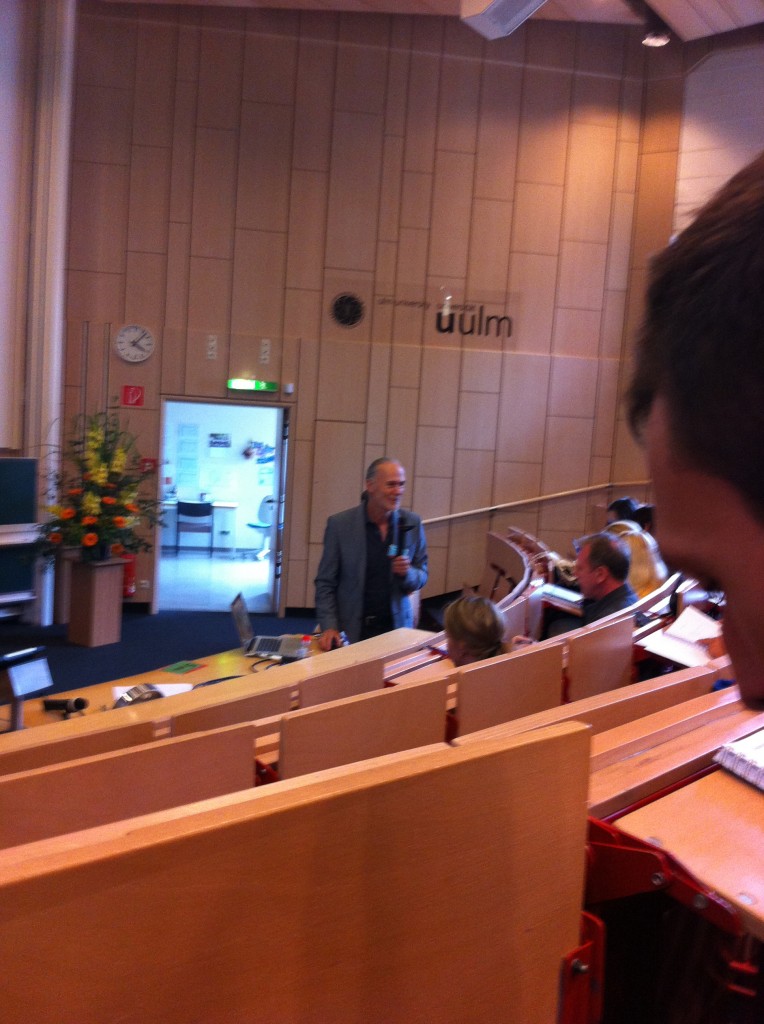
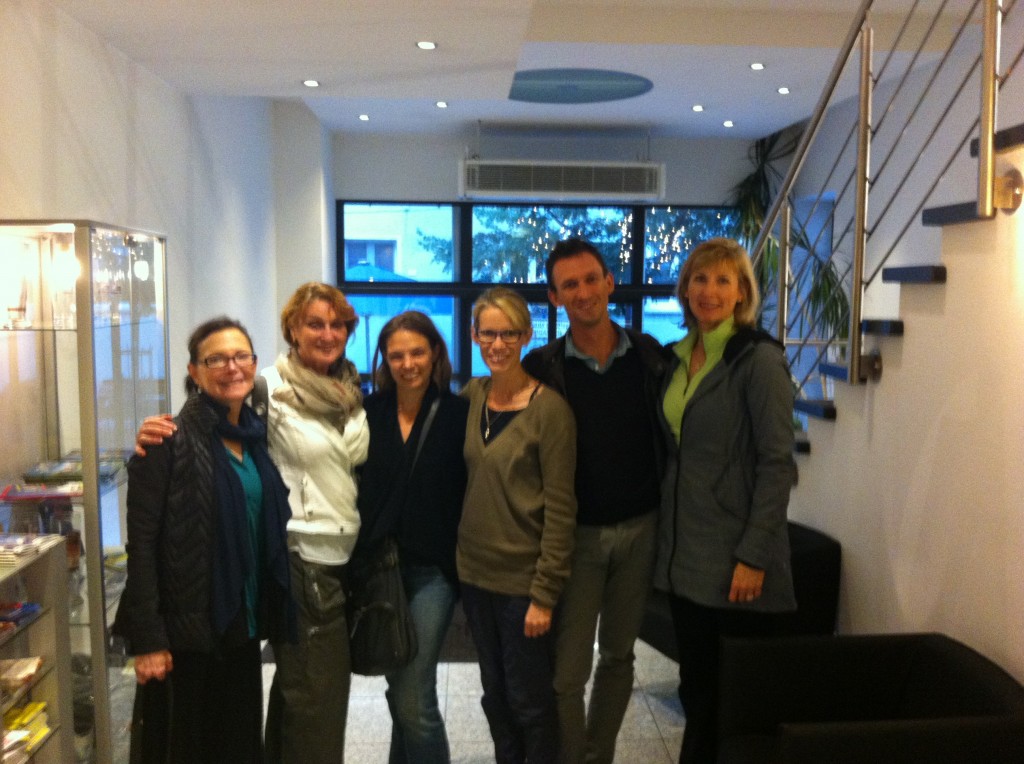
I am just back from an awe inspiring and life changing educational experience in Germany at Ulm University where the 3rd Fascial Summer School took place. A group of only 75 of us that included medical professionals , researchers, body workers and movement therapists were in attendance. We had the incredible privilege of sitting in on the the latest and most exciting research that is being done on fascia and a lot of this translates to how we work with the body in movement. It seems the landscape of what we know about the human body because of all this groundbreaking research is changing month by month . Leading scientist like Carla Stecco, Andre Vleming, Tom Finley and the brilliant Robert Schleip gave us tons and tons of jaw dropping information. We were also privy to asking these awesome intellects questions. Although intimidating , it really helped a great deal to translate the sometimes heady and always scientific language into practical knowledge and use to the everyday person.

IMG_0621During the next few months , I will be going through the enormous amount of studies, articles and notes that I have gathered on this work. I plan to present blogs and podcasts on the site about specific info about the fascia and how to train it. I am also in the process of developing some fun and informative live classes.

Our first short and fun introduction into Flossing the Fascia will be in Asheville at Fusion Pilates on wed Oct 8th at 7pm until 8pm. If you’re in the region – come join us!  (Optional suggested donation of $10 to be donated to MANNA Food Bank. Call 828.333.4611 if interested.)


Upper Back Strength & Flexibility with Classical Pilates Exercises


Using-Pilates-to-Prevent-and-Heal-Lower-Back-Pain--Stretches

What it is:

To create true functionality in our bodies, we must have a balance of stability, strength, fluidity and flexibility.

As we have seen in many previous entries, this concept of balancing the muscles and therefore the body is the core of the Pilates system.

In Pilates we do not group our exercises into categories, some for flexibility and some for strength. Instead, every exercise in Pilates is for both flexibility and strength at the same time. There is efficiency in every move. We get the best bang for our buck.

Our Goal:

The upper back, just like any other part of our body, needs this balance. If our upper back is not functionally balanced, we will be brought tot he extremes of either being hunched and rounded over or arched back so that our natural convex thoracic spine is distorted into a concave shape. We want to keep our spines in that perfect area right in the middle.

Here’s How:

Here are two Classical Pilates Mat Exercises to help you find that balance.

If any of these cause discomfort or pain, go back to the previous articles on the upper back and keep practicing the pre-Pilates exercises in those entries.

Exercise – Swimming

  • • Lie on the stomach with the arms stretched out in front. Start with the arms shoulder distance apart.
  • • Stretch you legs behind you keeping them hip distance apart.
  • • Place a folded towel under the forehead for extra comfort.
  • • Inhale and lift the left arm and right leg up.
  • • Keep the right hand and left foot pressing into the floor.
  • • The crown of the head and sternum should also lift and shine forward as the arm and opposite leg lift.
  • • Exhale and release.
  • • Slowly switch sides.
  • • Repeat four to six times.

Advanced Modification

For a more advanced version:

  • • Press the hands and feet into the floor and lift the eyes and sternum, as if you are raising your head above water.
  • • Inhale and lift the left arm and the right leg.
  • • Start to switch sides in a quicker repetition until you are paddling the arms and legs back and forth.
  • • At this quicker pace, the hands and feet stay off the floor as you paddle.
  • • Keep going and take a long exhale for five counts and a long inhale for five counts.
  • • Try to do four to six sets. (A set consists of a long inhale for five counts and a long exhale for five counts.)
  • • As you do this advanced modification, don’t let the head droop. Keep the crown of the head and the sternum shining straight ahead.
  • • Rest in Child’s Pose.

Exercise – Single Leg Kicks

  • • Lie on the stomach on a mat with the legs extended long behind you.
  • • Lift the upper body by propping the elbows right under the shoulders and pressing the forearms and fists (or palms) firmly into the floor.
  • • During the exercise, keep thinking of lifting the chest toward the ceiling as you press your pubic bone down into the mat.
  • • On a sniffing breath inhale, kick the left heel into the left buttock with a double beat.
  • • Keep the right leg long
  • • Don’t allow the head or shoulders to sink.
  • • Exhale and switch legs.
  • • Remember to stay lifted in the abdominals by imagining you have an ice cube under your belly button.
  • • Do six to eight sets and rest back into Child’s Pose.

Hot Tip:

During both of these extension exercises, keep looking for the “contrast in movement” to create more length in the body.

In Swimming,:

  • • Reach the crown of the head away from the toes.
  • • Reach the fingers away from the opposite toe.
  • • Reach the ear away from the tip of the shoulder-blade.
  • • Reach the top of the hamstring away from the heel.
  • • Reach the fingertips away from the top of the shoulder.

As you perform the exercise, focus on a few of these in your problem areas (for instance- tight shoulders, tight upper back, tight from of the hip)to create more and more length where you need it most.

We hope you found these tips helpful. Leave us a comment with your thoughts below!

Spinal Strength & Mobility

None of us want to move like a robot. We all strive to be graceful in our movement. But many of us find ourselves becoming extremely rigid as an outcome of the work we do in the gym. On the other end of the spectrum are those of us who are too flexible in the spine. For those, it’s equally important to incorporate exercises that create strength and support.


In many traditional exercises, we tend to move in a linear fashion, which is not optimal for spine health or for the long-term function of the body.

The spine has many ranges and planes of movement, all of which should be accessed and worked in your exercise sessions. A balance of strength and mobility in the spine will help us function without pain and with graceful, fluid movement.

A main Pilates principle involves optimizing the mobility of the spine in all directions. Any activity that we engage in, such as putting on our seat belt, picking up our children, playing tennis, or reaching for that high shelf, involves movement in the spine.

If the spine loses mobility in a certain direction, movement will be less comfortable and pain and injury can result.

Our goal is to perform some simple foundational exercises you can do every day to increase the flexibility, mobility, and strength of the spine.

Bridging/Pelvic Tilts Exercise Series

Curved Back Bridging & Pelvic Tilts

This exercise will build the mobility and flexibility of the spine.

Lie on your back (nothing under the head) with the knees bent. Keep the feet flat on the floor and the arms at the side of the body. Engage the deep transverse abdominals as you curl the tailbone up toward the ceiling to roll the back off the floor. Imagine you are wearing a striped shirt and lift one stripe up off the floor at a time, all the way from the tailbone to the shoulders.

At the top, make sure there is no weight on the neck. You want to be balanced on the upper shoulders and the middle of the back of the head. Keep your eyes pointed at the ceiling. The natural (concave) curve of the neck should be maintained.

Now, roll back down, one stripe at a time. Make sure the upper back comes down first. Then the middle back and finally the lower back and sacrum.

Don’t allow the behind to drop before you’ve put all the middle stripes of your shirt down. Remember to breathe in a slow, relaxed manner.

Flat Back Bridging & Pelvic Tilts

This type of bridging helps to stabilize and strengthen the spine.

Start in the same way as the previous exercise. Imagine that you are a wooden doll. The only joint you have is at the hip. So when you lift into bridge, the spine will keep its alignment.

With the breath, hollow out the abdominals (engage the deep transverse abdominals). Press the tailbone up toward the ceiling to lift the back off the floor in one piece while keeping the spine relatively neutral.

You can hold at the top and take two or three breath cycles if you are able to hold the alignment of the pose. When you lower, hinge again at the hips coming down in one piece. Use your breath to help slow and control the movement.

Once you advance in this exercise, try to hover one foot just a few inches off the floor, keeping the pelvis and spine in perfect alignment. Hold for a few seconds and change sides. Try to practice these exercises consistently each week to balance and align the spine.

~by Jennifer Gianni

We hope these exercise tips were helpful! Leave us any thoughts below.

Interview with Phillip Beach, Author of Muscles & Meridians

We wanted to re-post this interview with Phillip Beach from August to celebrate the launch of his first online workshop! Most of you already have Muscles and Meridians on your bookshelf, so you know what a groundbreaking work it is. Phillip Beach is holding some rare workshops in the United States in the coming months and was kind enough to join us for a quick online chat. Please excuse the shaky Skype footage and enjoy!

Attracting Your Ideal Pilates Client

By Lacy Fabian, PhD
Wouldn’t it be wonderful if we could identify our ideal Pilates clients? Imagine the regularity and the ease of the session! There are a few practices to increase your chances of attracting that ideal client.
1) What’s your Pilates style?
Part of knowing who you want to attract is knowing what makes you unique. Are you a disciplined type who likes consistency or more interested in including the latest takes on Pilates exercises? When you define your style you can brand yourself accordingly. This will help clients self identify toward you because your perspective resonates with them. You may wonder if you will lose some clients this way and the answer is that you may, but what you may lose in quantity you will gain in quality and repeat business.

2) Make your clients feel special.
If you have a client that’s great to work with let her or him know it. You may want to offer them a referral bonus–chances are their friends are like them and may be a great fit for you too. It’s also appropriate to include personal touches that reflect your Pilates style–you might send out birthday cards, give certain holiday gifts or feature local artists in your studio or playlist–anything that will help your ideal client feel more connected to you and your Pilates classes.

3) Know when to sever ties.
If you have a difficult client it may be because the fit for both of you isn’t quite right. The client who doesn’t seem to focus or take your cues seriously may need that disciplined instructor to keep them on their toes. Avoid letting a few clients create 90% of your angst and consider trying to refer them to a colleague who might be a better fit for them. This is an opportunity to network and engage with fellow Pilates teachers and help clients find their best Pilates venue. This type of community only contributes to the betterment of the profession.

As you work toward attracting your ideal client remember to stay flexible as it’s possible that your best fit will change over time as you gain experience and become increasingly aware of your own preferences. Get started writing out your vision of the ideal client now, so you’re all set to implement these practices in the new year.

Lacy Fabian is founder of Cupcake Pilates in Baltimore, MD. She is focused on helping people build routines into their lives to make daily fitness happen.

We hope you found this article helpful! Leave us your comments below.

Shoulder Strength & Flexibility: Classical Pilates Exercises

Shoulder strength and flexibility are important in and of themselves, but it is also imperative to have a real coordination and balance of the two in the shoulder girdle because many of the tasks we perform require a flow of mobility and brute strength that we must tap into on a second’s notice.
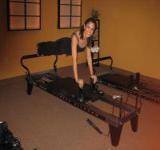
If there is even the slightest bit of imbalance in the shoulder structure, we have a great chance to experience anything from mild discomfort and irritation to some very serious injuries.

These next two classical Pilates exercises will help the body find this balance in the shoulder structure.

If these two exercises seem to be too difficult for your current level, it’s recommended that you continue with the pre-Pilates strength and flexibility exercises from the previous two entries. Perfecting those exercises will prepare you for these, which are more difficult.

As you begin attempting these more advanced Pilates exercises, take them slowly and remember the importance of the breath. Also, please pay close attention to the many tips offered in each exercise.

Exercise: Double Leg Kick

This exercise will help to stretch the shoulder and will open the chest.

• Lie on your belly with the side of your face resting on the mat.
• Bend your knees with the toes pointing toward the ceiling.
• Squeeze your legs together.
• The arms should be bent with the elbows pointing to each side and resting on the floor with the hands clasped as high as possible on the back.
• In this beginning position, the pubic bones and hips should press into the mat.
• The front of the shoulders and elbows should also touch the mat (do the best you can!).
• At this point, you should feel the stretch in the front of the shoulders and in the area between the shoulder blades.
• Inhale (use a sniffing inhale breath).
• Do three small kicks by bringing the heels toward the buttocks.
• Be sure that the pubic bone and hip bones stay anchored to the mat (do not allow the buttocks to pop toward the ceiling as you kick).
• Exhale and extend the legs to the mat while reaching the arms toward the feet.
• Allow the upper back to extend so that the sternum and crown of the head are pointing forward.
• Make sure the neck stays long as the chest lifts.
• On your next exhale, return your body to the starting position with the opposite side of the face on the mat.
• Complete four to six sets.
• When finished, rest in Child’s Pose.

Exercise: Swan Dive Series

This exercise helps to lengthen the upper back and to strengthen and open the shoulders.

Swan Prep

• To get into the starting position, lie on your belly and squeeze your legs together.
• The hands should be under the shoulders with bent elbows.
• Inhale and pull the abdominals in as you straighten the arms.
• The shoulders should stay away from the ears as you straighten the arms.
• The neck should remain long with the eyes pointing forward.
• If you experience any discomfort or pain in the lower back, separate the legs to hip width.
• Exhale and slowly lower back into the starting position.

Beginning Swan

• Begin with the same starting position as Swan Prep.
• Inhale and straighten the arms
• Exhale and glide the arms forward with the palms facing either the ceiling or each other as the body rocks forward toward the upper chest.
• Inhale, rock back up, and catch yourself with your hands.
• The arms should be long at the top.
• Do four to six repetitions and rest in Child’s Pose.
• Add some extra padding if the rocking causes any discomfort or pain at the pubic bone.
• If you experience any discomfort or pain in the back, please stop the exercise immediately and sit back into a Child’s Pose.

Advanced Swan
• Begin with the same starting position as Swan Prep.
• Inhale and straighten the arms with the chest lifting to the ceiling.
• Release the arms forward and inhale while rocking forward toward your chest with the arms extended in front of you with the palms facing either the ceiling or each other.
• On the next exhale, use the momentum to help as you rock back with the fingers and eyes reaching for the ceiling.
• Keep rocking forward and back, inhaling and exhaling.
• Do four to six Swan Dives and then sit back on your heels in Child’s Pose and rest.Hot Tips
• Try to maintain a still, rigid body as you rock back and forth.
• Ideally, the legs should be glued together. This will help to create a better rocking motion. If this proves difficult, allow the legs to separate, but keep the muscles of the core, the glutes, and the legs very active.
• Please do not hoist the head forward and back. Find the lift from the chest and keep the length in the back of the neck throughout the entire exercise.

We hope you liked these tips! Leave us your thoughts below!

Static vs. Moving Posture Check

Watching clients move when they think no one is looking can tell you so much about why some of their issues remain unresolved. How they stand, sit, get up, or even put on their shoes can give you clues about their habitual movement patterns in a way that not even equipment can tell you. The devil is in the details as they say, so keep your eyes and eyes open at all times. Look for asymmetries, abnormalities, or a hitch in their giddy up. All of these are pieces of the movement puzzle, and can lead to transformation later.  See what we mean in the following video.

Thanks for watching! Leave us your comments below!

FFO Hits the Road! Sylvia Byrd-Leitner Instructor Showcase and Video

One of our biggest missions here at FFO is to foster community.  In that spirit, we occasionally load some video gear into the FusionMobile and hit the road to go meet Instructors and Studio Owners in order to get to know them.  A few months ago, we did a brief tour of the East Coast and had the chance to catch up with Sylvia Byrd-Leitner from Pilates Core Center in Cherry Hill, New Jersey.  Watch her Instructor Showcase below…

…and be sure to check out these Pilates tips from Sylvia, too!

PHNjcmlwdCB0eXBlPSJ0ZXh0L2phdmFzY3JpcHQiIHNyYz0iaHR0cDovL2Z1c2lvbmZpdG5lc3NvbmxpbmUuZXZzdWl0ZS5jb20vcGxheWVyL0xWTjViSFpwWVZac2IyY3ViWEEwLz9jb250YWluZXI9ZXZwLUpOWVJQMUxIVzMiPjwvc2NyaXB0PjxkaXYgaWQ9ImV2cC1KTllSUDFMSFczIiBkYXRhLXJvbGU9ImV2cC12aWRlbyIgZGF0YS1ldnAtaWQ9IkxWTjViSFpwWVZac2IyY3ViWEEwIj48L2Rpdj4=

160x150xsylvia.jpg.pagespeed.ic.bL-vSSNHvFSylvia Byrd-Leitner is an impassioned instructor. Her goal is to share the wealth of knowledge she has accumulated throughout her life in the field of movement. As an undergraduate she worked as a physical therapist’s aide at Moss Rehab in Philadelphia. She went on to earn her MFA in Dance/Movement from Temple University. She has performed and choreographed nationally and spent 5 years teaching dance at Rowan University before opening her own Pilates Studios. She has been teaching Pilates for 14 years. She is a registered Yoga teacher and continues to study movement and anatomy with some of the foremost and inspiring instructors internationally. What motivates her most is the joy of movement. Her keen eye has helped her bring awareness to her clients, helping them to focus on the details of their bodies in motion. As Joseph Pilates said, “A few well-designed movements, properly performed in a balanced sequence, are worth hours of doing sloppy calisthenics or forced contortion.” You can visit Sylvia’s website here.

If you’d like to be featured at FusionPilatesEDU.com, just let us know!  When we come to your area, we’d love to stop in to say hello. If you’d like to be a guest presenter, see details here.

5 Creative Ways to Find Time for Personal Pilates Practice

Please enjoy this guest post by Anastasiya Goers. If you’d like to post your own article or short video on FusionPilatesEDU.com, please let us know!

5 Creative Ways to Find Time for Personal Pilates Practice

How many hours a week do you teach Pilates?

How many hours a week do you do Pilates yourself?

How big of a gap is there between your two answers?

anastasiya-pilates-smFinding time for personal practice is one of the biggest challenges for Pilates instructors. We bake in the Pilates world so much that we rarely take time to taste what’s been cooking.

It’s easy to find excuses why we, as instructors, don’t have time for Pilates. We don’t feel like it. We are too tired. We need a break from Pilates. How many more can you think of?

The truth is that a Pilates instructor without personal practice is like a dentist with bad teeth. Would you trust your teeth to a dentist with yellow, crooked teeth and bad breath? I doubt it. Do you think that your clients should trust their bodies to an instructor who doesn’t practice what she/he preaches?

Why did you become (or are studying to become) a Pilates instructor? Did you just wake up one day and say “I’m going to be a Pilates instructor though I hate movement.” I dare to assume your answer is “no.”

Most of us come to Pilates as a natural way to continue our passion for mindful movement, exploring our bodies and healing our bodies through movement. This is the reason why we fall in love with Pilates and why we want to share this passion with our clients.

Finding time for personal Pilates practice is more than just staying in shape.

  1. Whether you are a new or an experienced instructor, you can learn the Method best by feeling it in your body. The success of your clients depends greatly on your ability to cue them during the session. Your cuing in turn depends on your understanding of the exercises, your ability to explain the sensations in the body, and knowing how to activate the core musculature (something that you can learn only by feeling it in your own body.)
  2. You are your own business card.  Remember the dentist example above? Clients who come to you want to see the results that they can achieve through Pilates: the ease of movement, near-perfect posture, a trim tummy (I know, it’s not the purpose of Pilates but we all know that it’s one of the main reasons our clients (particularly women) start doing Pilates), and confidence in the body. Practicing Pilates shows your clients the benefits of taking classes from you.

I’m personally far from being a perfect Pilates model but when people see me and find out that I gave birth to two sets of twins they inevitably ask me how I managed to stay in shape. Pilates got me through it, for sure. My clients immediately see the results that they can get from working with me. What could be a better advertisement?

  1. Personal Practice is the most valuable CEU. We all know that we need to earn our CE units to keep our certification. As instructors we need to stay abreast with new research and improve our teaching techniques or learn to work with special populations. However, learning the theory behind movement will be a useless waste of time if you don’t practice it in your own body. Personal Pilates practice is the cheapest and most valuable CE unit that is always available in our area and most of the time convenient for us.
  2. Personal Pilates practice improves your business revenue. When your clients see how dedicated you are to Pilates they get inspired by your results and enthusiasm. They are more likely to stick to their weekly sessions when they see you as an example of a Pilates lifestyle.
  3. Personal practice prevents burnout. Teaching can be exhausting especially if you get into the routine of teaching the same (or similar) Pilates order every time. Personal practice helps you stay mindful about your teaching and find new ways to stay passionate about your job.

I hope you are convinced how important it is to find time for personal Pilates practice. But the biggest question is how do you fit it into your already busy schedule? Take a look at these 5 creative ways to find time for Pilates:

  1. Every week have an exercise to master. With hundreds of Pilates exercises on different pieces of apparatus you can never run out of moves to explore. Each exercise has several modifications and variations to appeal to a student at almost any level. Pick an exercise (whether it is an advanced or a beginner move) and explore it in your body for a week. Look through the notes in your manual (the ones you thought you’d use all the time during your training but completely forgot about.) If possible, let someone else teach you this exercise. You will improve your teaching technique as well as discover something new about your body.
    Time required: 15 min or less.
  2. Let someone else teach you. One of the challenges of being a Pilates instructor is taking off your teacher hat and putting on your student pants. I admit, after teaching several classes and creating programs for different body types the last thing you want is to think of yet another order to follow yourself. Sometimes it’s just easier to let someone else take the reins to guide you through the movement. If possible, take a class from another instructor. If that’s not an option then use Pilates DVDs, follow the order from your Balanced Body manual, or use subscription-based Pilates video channels to take your body on a smooth Pilates ride.
    Time required: 30 min to 1 hour
  3. Make Pilates part of your day. Pilates is more than just an exercise program. Focus on Breathing, Centering and Control in every activity throughout the day. If you are teaching your clients about finding their core, engage the same muscles in your own body. When you are driving, control your posture and concentrate on deep breathing (while still staying focused on the road of course.)
    After my second pregnancy and a C-section I had trouble connecting to my core. Actually, I felt like I had a huge mushy bag in front of my body instead of the muscles that I had such great control of before the pregnancy. Of course, I couldn’t jump back to my Pilates routine (my body wasn’t ready for it, and I had to first deal with diastasis recti before doing anything else.) I focused on Pilates breathing and centering no matter what I was doing. Every day I felt another fiber of my core wake up and respond to my call without doing any conventional Pilates exercises.
    We do Pilates to gain complete control of our bodies for everyday activities. Performing these daily activities with Pilates principles in mind is the best demonstration of the Method at work.
    Time required: 0
  4. Come to the studio a little earlier. If you teach at a studio simply plan to arrive 30-45 minutes earlier to check the equipment and to have a quick workout. It’s easier to find time for yourself at the beginning of the day than at the end when you are already tired after a full day of teaching.
  5. Your personal Pilates practice is part of your job. Being able to do Pilates any time is a perk of our profession, not a requirement. But instead of finding excuses why you don’t have time for personal sessions simply assume that practicing Pilates is an essential part of being an instructor. You wouldn’t think about teaching a class without being dressed appropriately or making sure that you’ve brushed your teeth in the morning. In the same way, don’t think about teaching Pilates without practicing it. Make room in your schedule for personal Pilates sessions. You can be an excellent Pilates instructor only if you are passionate about what you teach and what you do.

No more excuses. Go do some Pilates!


Anastasiya Goers is a Pilates instructor who had the privilege of training with Jennifer Gianni and who is still working on completing her certification through Balanced Body while teaching Pilates in Murrells Inlet, SC. She is as passionate about doing Pilates as she is about teaching it. She has combined her passion for Pilates with her love of the online world by creating a Pilates community website – PilatesBridge.com – that brings Pilates teachers and Pilates students together.

We hope you found this article helpful! Let us know what you thought below.

We Have a Winner!

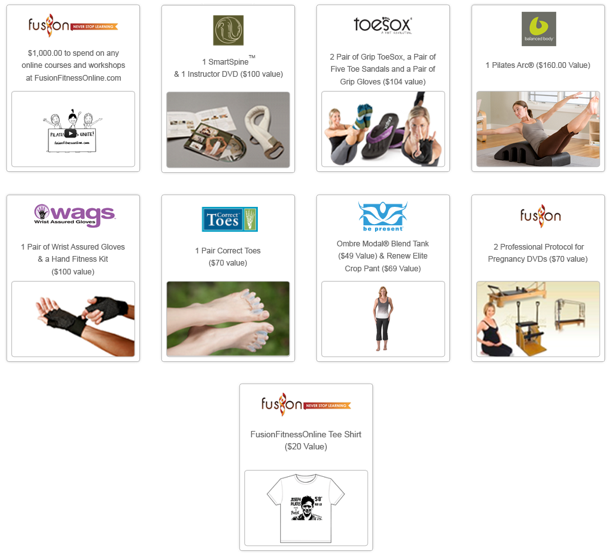
When we launched this site 6 months ago, we decided to celebrate by holding a MASSIVE contest with amazing prizes from incredible companies like SmartSpine™, Balanced Body, WAGs, ToeSox, Correct Toes, Be Present, Fusion DVDs, and of course FusionPilatesEDU.com!

The lucky winner was drawn on September 1, 2013 using Random.org. And the winner is….

Shari from The Pilates Place in Westminster, California!  Shari has won all of the items listed below.

Congratulations, Shari!

Contest

Standing Splits

Learn to use the spring weight to balance your “Up the Mountain” muscles and your “Down the Mountain” muscles, and everything in between.

The Reformer is a phenomenal strength and stability builder if used in the right way. See a very simple standing sequence on the Reformer and how just a change of the spring can make it a whole new exercise that is working a different set of muscles and skills, making the body stronger and more intelligent.

We hope you enjoyed this video. Leave us your comments below!


Romana Kryzanowska & Julian Littleford

We recently lost two Pilates greats. Legendary first generation teacher Romana Kryzanowska died on August 30, 2013. She is an inspiration to all of us and will be greatly missed. Julian Littleford of J.L. Body Conditioning in Del Mar, CA died on August 31, 2013. He was an amazing, creative teacher and human being. I was lucky enough to have worked with them both. This is a good reminder to us all that what we are experiencing is not permanent, and we need to take it all in and find the joy even in the saddest times.

~Jen Gianni

For a short article on Romana, click here.

Shoulder Flexibility: Pre-Pilates Exercises

As we have seen in a previous post, our shoulder anatomy is somewhat tricky. In many ways, it is a fragile and weak structure that needs to be very strong and very mobile to perform the many tasks we require of it.
Performing too many of the wrong movements and not enough of the correct movements in the shoulder socket causes many debilitating problems from frozen shoulder to rotator cuff injuries to injuries of the nerves, such as brachial plexus neuropathy (the list goes on and on).

In this entry, we will explore three pre-Pilates shoulder mobility exercises that create space in the shoulder joint. Practiced daily, these can create large improvements in keeping pain at bay and still allow us to perform all of the movements needed during the day.


Exercise: Theraband Shoulder Stretch

This exercise works the rotation of the shoulder joint, creating synovial fluid to help the ball glide better in the socket.

• You can do this sitting up tall on a chair or standing up.
• If standing, make sure you’re not hyper-extending the legs.
• Hold one end of a Theraband in each hand.
• The arms should remain straight throughout.
• This exercise will be easier the farther away the hands are on the Theraband (causing less tension in the band).
• The closer the hands are to each other, the more flexibility will be required in the shoulder socket.
• On an inhale, slowly circle your straight arms up over the head and behind you.
• Exhale and slowly circle the arms back to the starting position.
• Repeat four to six times.

If you experience any sharp pain, grinding, or popping in the joint, stop right away.

Exercise: Wall Shoulder Stretch

• Stand facing the wall with the right arm extended on the wall so that the shoulder is in line with the wrist and the palm is pressing into the wall.
• Gently rotate the feet, hips, and torso and face away from the right arm.
• Hold this position and slowly climb the fingers up the wall. As the hand goes up, the shoulder and scapula should glide down and away from the ear.
• Hold and cycle the breath.
• After ten to twenty seconds, slowly bring the hand down, turn back to the wall and release both arms to your side.
• Switch sides and repeat.

Exercise: Scapula Glide

The scapula must be able to glide smoothly on the back of the rib cage, like a slippery bar of soap, in order for the shoulder socket to function well.

When the shoulder is internally rotated, the scapula glides up toward the shoulder.

When the shoulder is externally rotated, the scapula glides toward the back pocket.

The scapula must be able to glide up, down, together, and apart to keep the shoulder structure healthy and fully functioning.

• Sit up tall on a chair.
• Hold a dowel (or broomstick) with both hands. The dowel should be horizontal.
• Keep your arms long, reaching in front of you so that the shoulder is in line with the wrist.
• During the following exercises, the spine should remain still and neutral and the arms should remain straight.
• Inhale and glide the shoulder blades up to the ears.
• Exhale and glide the shoulder blades into your back pockets.
• Repeat four to six times with the same breath pattern.
• Repeat four to six times with the opposite breath pattern.
• Inhale and bring the shoulder blades together (toward the spine).
• Exhale and glide the shoulder blades down and apart (imagine the bottom tip of the shoulder blade could wrap to the front of the body).
• Repeat four to six times with the same breath pattern.
• Repeat four to six times with the opposite breath pattern.

~by Jennifer Gianni

We hope you enjoyed this post! Leave us your thoughts below.

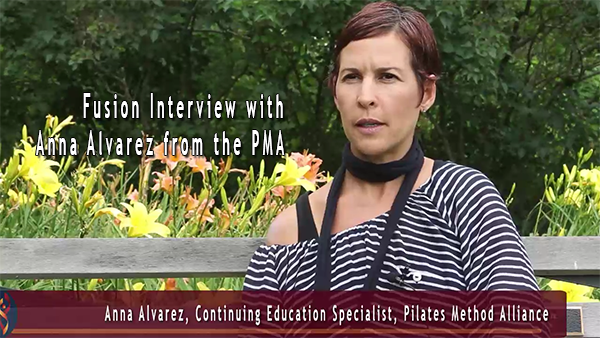
Anna Alvarez from the Pilates Method Alliance

We were thrilled to get a chance to catch up with Anna Alvarez from the Pilates Method Alliance for a brief discussion about what the PMA does. Please check below for more resources and for links to some of the subjects touched on in the video.  Thank you to Anna and the PMA! Check below this video for more resources and links.

Did you know you can get PMA CECs online at FusionPilatesEDU.com? Get 5 PMA CECs right here. Many more opportunities coming soon!

Pilates Method Alliance Website

About/History of the PMA

Become a PMA Member

Find PMA CECs

PMA Petition Application

PMA Scope of Practice

PMA 2013 Conference

PMA Conference Volunteer Opportunities

Do you have other questions you’d like for us to ask the PMA? Add them to the comments below! Is there anyone else in the Pilates world you’d like to see interviewed? Comment!

FFO Hits the Road! Chris Roberts Instructor Showcase and Video

One of our biggest missions here at FFO is to foster community.  In that spirit we occasionally load some video gear into the FusionMobile and hit the road to go meet Instructors and Studio Owners in order to get to know them. A few weeks ago we did a brief tour of the East Coast and had the chance to catch up with Chris Roberts from Westborough, MA.  Check out his Instructor Showcase and his Pilates tips for cyclists video below.

PHNjcmlwdCB0eXBlPSJ0ZXh0L2phdmFzY3JpcHQiIHNyYz0iaHR0cDovL2Z1c2lvbmZpdG5lc3NvbmxpbmUuZXZzdWl0ZS5jb20vcGxheWVyL1EyaHlhWE5KYm5OMGNuVmpkRzl5VTJodmQyTmhjMlV1YlhBMC8/Y29udGFpbmVyPWV2cC03N0RQNjdSRjIyIj48L3NjcmlwdD48ZGl2IGlkPSJldnAtNzdEUDY3UkYyMiIgZGF0YS1yb2xlPSJldnAtdmlkZW8iIGRhdGEtZXZwLWlkPSJRMmh5YVhOSmJuTjBjblZqZEc5eVUyaHZkMk5oYzJVdWJYQTAiPjwvZGl2Pg==

Visit Chris’s website at www.nourishbodysoul.com.

If you’d like to be featured at FusionPilatesEDU.com, just let us know! When we come to your area, we’d love to stop in to say hello. If you’d like to be a guest presenter, see details here.

Foam Roller Hip Openers

The foam roller has become a must in Pilates studios and gyms all over the country for good reason. It is a versatile tool that not only aids in myofascial release but also in balance. So many clients walk into the studio from hours in a sedentary posture, and it is not in their best interest to immediately escort them into movement. With the hips and glutes as a primary area of tension, this release work is a must for all who walk in your door. Give it a try before leg work and spinal articulations, and see the difference. This video will show what we mean.

We hope you enjoyed this video! Tell us what you thought below.

Healthy Boundaries: How to Deal With a Difficult Client

The client is always right.

Well, yes and no. In the service industry, we must always strive to please our clientele and go to whatever lengths we possibly can without compromising our integrity, putting them or ourselves in danger, inconveniencing other clients, or losing income flow for ourselves or the studio. There are times that can be very trying with certain clients and you may not be able to please one or two clients, but you will have to let it go.

In those cases, the stars are just not lining up. It could be that the client has very unreasonable expectations about you and the studio and nothing can be done about that, or it may be that you and the studio are just not a good match for this client. In any case, you do what you can and always be polite and up front.

Some problems can arise from differences in personality and/or style with teacher and client. Sometimes the solution can be as easy as switching the client to a different teacher in the studio. Sometimes a regular client in a group class which suddenly gets several new members may feel they are not getting the same workout, etc. This is a hard one, especially when the class is a beginner/intermediate and is open to all. You want to give as much as you can to the long-time client, but you also want to be open to new people coming to the studio and trying new classes. Sometimes there is nothing to be done except to ask the old client to take some privates at a discounted price until the others catch up a bit. Sometimes you can see if another day or time will work for another class. If they choose to stay in the class, you as the teacher must do all you can to accommodate all levels and keep everyone safe. This takes a lot of creativity and energy. Most times if you show the client that you are really looking for compromises and another way to meet their needs, they really appreciate it and will be more patient and flexible.

To sum up, when dealing with difficult clients who get emotional and are demanding, always, always give them your full attention and understanding. Listen to them and don’t be too quick to interject or to say there is nothing to be done. You might be surprised that you may be able to find a really nice solution for you, the studio, and the client.

The most important piece is that you do not ignore or marginalize the concerns and wants of your clients, however unreasonable they seem to you. In the end, you may not be able to accommodate them, but at least you have really listened, talked, and tried your best to figure out a solution. This will make a huge difference and impression on most clients even if they don’t end up staying at the studio.

~by Jennifer Gianni

We hope you found this article helpful. Tell us your thoughts below!

Prep to Squat in the Doorway

Many people in our culture have a difficult time with a squat position because the closest we get to the floor is a chair. The squat position is essential to creating balance and ease in our hips and legs. It massages the internal organs to create better circulation. The deep squat position is a birthing position that creates flexion in the pelvis, feeds the femur deep into the hip socket and nutates the coccyx which stretches the back of the pelvic floor. Most people in our culture need to be brought into the deep squat progressively, making sure that the hips, knees and ankles are in agreement. Using a door frame to engage the mid-back and support under the heels can help.
We hope you enjoyed this video! Tell us your thoughts below!

Creative Imagery and Visualization

Imagery and visualization are key components in our Pilates practice. It is amazing how much power lies in our metaphysical selves, and it’s extremely beneficial when we are able to connect our bodies with our minds. The general perception is that the mind controls our body, but it’s more of a perfect marriage where each delivers benefits and support to the other. Neither is dominant. The body and mind are most powerful when they work together as equal partners.
I read an article long ago that provides a prime example of how influential this connection can be. An experiment was being done on professional basketball players who were working to improve their success at making free throws. The test subjects were split into two groups: one group was allowed to practice its free throw every day while the other group was not allowed to physically practice at all, but they were told to visualize themselves on the court throwing successful free throws every day. After a month, the result was that the group that was allowed only to visualize themselves making free throw after free throw had greatly surpassed the performance of the group that was allowed to physically practice every day.

If thoughts are so powerful, it makes sense to try to harness your thinking to bring about positive changes in your body. This concept is the very essence of Pilates.

In Pilates we recognize that it is only through the synchronization of thought and action that an exercise is truly effective. To create a healthy and fit body, you need to integrate the mental, physical, and spiritual.

If you view your body or the progress toward your exercise goals in a negative way, you will need to be aware of that and work to change that viewpoint. Positive thought will bring about positive changes in your Pilates practice. In Pilates it is necessary to complement each physical action with a mental focus or creative visualization. So the way you perceive the exercise you are performing is of the utmost importance. Each time you work through the movements it is important that you visualize what it is you are trying to achieve. Painting a picture in your mind helps your body to respond in the correct way.

As you practice the physical moves while marrying them with their corresponding images you will notice that you are able to get deeper into the move. Employing this technique will be difficult and sometimes you may need to do fewer repetitions the more you practice. This is because you are becoming more precise and using more control. Pilates is one of the few forms of exercise that gets progressively more difficult, but the results are worth it. In time you will look taller, slimmer, and more toned.

Our Goal

We want to connect the power of the mind to the body using creative imagery and visualization which will help us to achieve improved results.

Here’s How: Let’s infuse creative imagery and visualization into a simple abdominal curl. First, lie on your back with bent knees and your feet flat on the floor. Keep your pelvis neutral. Take a few breath cycles to fire up the core musculature. As you cycle the breath, imagine you are lying on a warm sandy beach. Your bones and flesh relax into the sand. Everything should feel extremely heavy.

On your next inhale, float your long arms up so that the fingers point to the ceiling. Imagine that the arms are moving through water.

Exhale and move just the arms down to your side. Once more, inhale and float your arms up. Now, on the exhale, bring the arms down and roll the head and shoulders up to look at your belly by rolling the back of the ribcage into the sand under you. Your neck and shoulders should feel long and relaxed. On the next exhale, slowly carry everything back to the starting position as if you are moving through water.

Concentrating on these visual images of sinking into the sand and moving through water will help your mind and body work together to perform the exercise with optimal form.

Hot Tip

Do two or three more reps, trying to connect the physical movements to the images and to the end goal of the exercise.

At first, go very slowly and deliberately, connecting all the dots. As your practice progresses, the body and mind will work in synchronicity with the exercise and the movement will become more fluid and will feel more connected. This will create a rhythm and flow to the exercise and, eventually, to your entire workout.

Thanks for reading! Be sure to tell us your thoughts below.

Interview with Marie-José Blom

marie-joseMarie-José Blom is an amazing teacher of teachers with a wide scope of experience. She is the creator of the SmartSpine™ line of products as well as the Stability Sling System. Her first online workshop is live at FusionFitnessOnline right now (and now offers 5 PMA CECs!). We had the opportunity to interview her as she conducts her Pilates Leadership Introspective course in Tokyo with our good friends at the beautiful Studio Natural Flow.

Fusion: Why and how did you first develop the Stability Sling system?

Marie-José: I developed the stability sling system as a way to introduce a challenging workout to clients with special needs — but most important was that I had a way to teach alignment skills as well as “core ability.” I needed a way to create a program that was geared to the client with physical challenges (recovering from injuries, or as a postpartum program, etc.).

By designing an environment of supported neutral positions, the learning process of movement becomes easier and will then be experienced on a deeper level by the client. The Sling System makes the pure and simple approach rather challenging while also maintaining a biomechanical correctness.

All of the exercises I use with the system are modified versions of the traditional Pilates repertoire, used as a way to prepare the client for more progressive work. This approach establishes more of a solid foundation to progress from with profound results. The Sling System provides a “third hand” for the instructor enabling them to teach with more detail and efficiency.

The Sling System repertoire was carefully developed with a whole body and complete workout in mind. When taught successively in the order as presented, the goal for sound, profound, and versatile approach is achieved.

Fusion: How have you seen Pilates training change over the course of your career?

Marie-José: Before we look at the change in the training of Pilates in the last 25 years, we should consider the changes in the business model of Pilates itself. The Pilates business used to be the small entity or studio that delivered a unique form of “designer fitness.” Teachers were traditionally hand picked, often from the very dedicated longtime client base. Most were trained dancers who received an on the job training in exchange for lessons along with an internship. Teaching was a labor of love and dedication with modest pay.

Much changed when Pilates became more known and mainstream.

The studio model itself changed. Bigger studios became prevalent, and with that came the need for more instructors. This led to a new profitable Pilates related business: the business of training teachers. The individual “labor of love” is now replaced by education en group.

It is good that more opportunity was created for an instructor in training. There developed a more formal setting, with a set curriculum which requires a solid commitment on the part of the trainee. This commitment included an average of three to four month class time with real time teaching. This approach turned out some excellent instructors and by now some of these are the teacher of teachers of today.

This approach is currently considered a “boutique approach” — and for the business of training teachers it would not provide opportunity for all. It was selective.

A more profitable concept is on the rise, and the market seems to be ready. Many enthusiasts interested in a Pilates career within the past structure would find it difficult to find the time or the finances to commit to a long involved training program. To capture this market, the teacher training business adapted to a format that could cater to this segment being budget-friendly and modeled in the convenient modular weekend courses that we see today.

I also have heard the term “fast track” training (although I hope this was only a bad dream!).

My personal feeling is that when one cannot find the time and investment it takes to enter a new career through quality education — then the time is not right yet.

This new market and the demand for the weekend format formula opens up opportunity for potential teachers with all backgrounds — and this includes some with marginal education or preparation.

Most students today will finish the courses with minimal opportunity of real time teaching. This may perhaps fulfill the need for instructors as demanded by the fitness industry now that Pilates is offered in every gym in the country.

For an exclusive Pilates environment, clinical and therapeutic approaches, more in-depth education, and a suitable background is still desirable. I know this is an “old school” idea — but it is how I feel!

The real lessons and the true learning begins when the courses are finished. It is at this crossroad where the gap between the training of back then and the training of today needs to be closed.

The solution will be in the high end real time continuing education offered. Education that explores the integration of new sciences to stay updated and well informed. That and high quality online education (which I was admittedly skeptical of) and continuing support of new teachers will put skill and career growth opportunity within the reach of any motivated Pilates educator.

Fusion: What are your latest Pilates passions? What’s got your interest right now?

Marie-José: There really is not a “latest passion”; however, being passionate about the miracle of the human body — and to have the opportunity to continue the exploration of Pilates as a powerful, proactive tool that can contribute to its health, efficiency, and longevity — is surely an ongoing passion of mine.

To impart this knowledge to my clients and witness their changes and little victories, that to me on a daily basis is very rewarding.

Also, to have the opportunity to share my own evolved work through workshops with others, students and teachers alike, is rewarding to me as well — the chance to spark an enthusiasm for new discoveries and the integration into their Pilates practice is deeply gratifying and I never tire of it.

Something that has sparked my own curiosity is what is currently happening with the role of the fascial system in the body and relating these scientific outcomes to our Pilates work.

Taking the constant emerging new knowledge on this subject and using it to make Pilates an even more effective tool to address this amazing system is an ongoing joy. I have been interested in the development of this scientific research in particular for the last ten years and have attended the now well known Fascial World Conferences. This has significantly influenced my teaching with a deeper understanding ,application and integration into the Pilates work.

The research in this fascial field also validated my work with the SmartSpine system. Why and how this system works is no longer a hypothesis — and the effectiveness evidenced during use and practice with the clients can be explained. This gave me the inspiration to take the SmartSpine to another level. All of this is exciting and keeps me passionate about my work.

Fusion: We know you were very hesitant about doing an Online Workshop. Can you tell us why?

Marie-José: I was very hesitant about doing an online workshop because I am a very hands-on teacher and teaching from a computer seems very un-intuitive to me. I did not think that I would have the opportunity and the time to go enough into detail as I can in a live workshop situation. I also doubted the effectiveness of online learning for that same reason. I believed that on camera (I don’t love the camera) I cannot be myself. I decided to give it a try with the idea that if I really hated it — we just wouldn’t go live with the project.

As I struggle to get used to the camera, I found that working with Fusion on the Sling System workshop made me feel very comfortable with a warm and professional attitude, encouragement and patience. With this team, I am sold on doing it again. And the final product is very effective in delivering the information I want to deliver. The fact that the student can sit with the material, rewind and review, watch it multiple times — these are the pluses of this type of education delivery.

Fusion: What direction do you want to see our profession head in?

Marie-José: This is a challenging question.

I wish that the legacy of Pilates will be carried on in the hands of talented and caring professionals with passion, commitment, and integrity. I would love to see Pilates more integrated in the bigger picture of the multidisciplinary approach to wellness.

Fusion: If there was one thing you would like to change about our Pilates community as a whole, what would it be?

Marie-José: True learning happens when the ego dissolves. This I believe also applies in making any change or progress in your work. We need less talk about community and more actual community through sharing the tools we all create with the best interest of all our students in mind.

In the greater picture, everybody in business will benefit from a caring and sharing collaborate. This will make the Pilates infrastructure more solid.

Fusion: If you hadn’t given your passion to Pilates, what would you have done?

Marie-José: I think, here is the usual, “If I had known then what I know now…” I would have taken the medical direction. This thought still attracts me, and who knows… I feel I am not quite done yet.

Fusion: We certainly hope not — we have lots more to learn!

Watch the following video for an overview of Marie José’s online workshop Simply Challenging, available here. We have just added 5 PMA CECs, which you will receive on completion of this course.

For more info on Marie-José Blom and to see her live teaching schedule, visit Pilates Inspriation.

To check out her amazing SmartSpine™ product, please visit our Store.